REPMOLD | Meaning, Uses, Features, Applications & Complete Guide
Source: lastmagazinepro.com
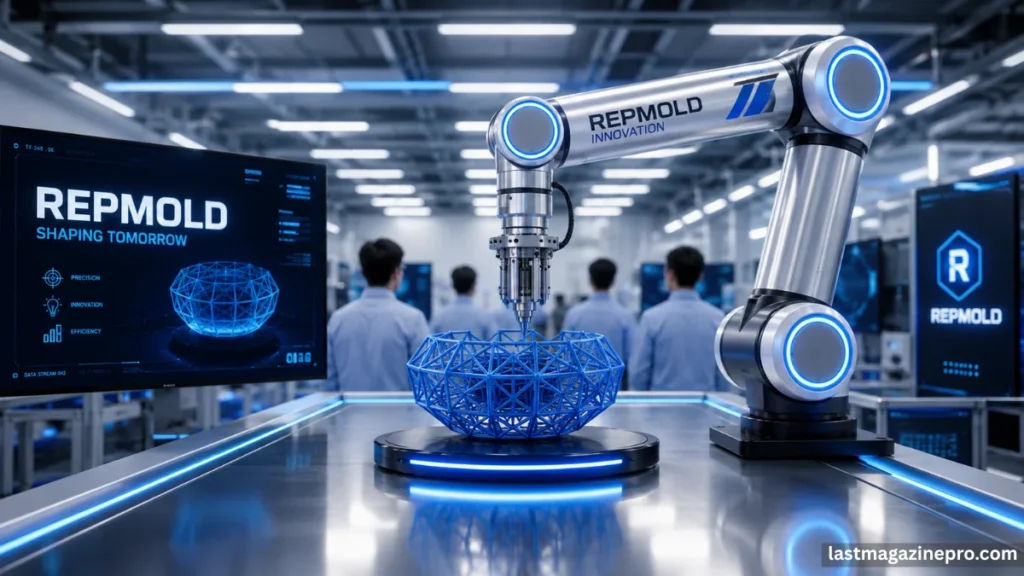
REPMOLD is a term used to describe a modern approach to mold repair, replication, and rapid tooling that combines 3D scanning, CAD modeling, and digital fabrication methods like 3D printing. Instead of remaking a damaged or worn mold from scratch using manual craftsmanship, REPMOLD-style workflows digitize the original part, correct or enhance the design digitally, and then reproduce or repair the mold with far less time, labor, and material waste.
People search for REPMOLD because manufacturing teams, engineers, and product designers are increasingly looking for faster and cheaper alternatives to traditional tooling. When a mold cracks, wears down, or needs a small design revision, replacing it the old-fashioned way can take weeks and cost a significant amount. REPMOLD offers a way to shortcut that process using digital tools.
This guide covers what REPMOLD means, how it works, its core features and benefits, where it’s used across industries, how it compares to traditional mold-making, its limitations, best practices, and where the technology is heading. It’s written to answer both quick “what is it” questions and deeper implementation questions.
What Is REPMOLD?
1. Definition of REPMOLD
REPMOLD refers to a digitally driven process for repairing, replicating, or rapidly producing molds using tools such as 3D scanning, computer-aided design (CAD), and additive manufacturing (3D printing).
2. Simple Explanation
Think of REPMOLD as taking a photo (a 3D scan) of an existing mold or part, cleaning up that “photo” on a computer, and then printing or machining a new or repaired version instead of carving or machining one entirely by hand from a blank.
3. Technical Meaning
Technically, REPMOLD workflows typically involve capturing the geometry of a mold or part with a 3D scanner, converting that scan into an editable CAD model, correcting wear, defects, or design flaws in software, and then producing the updated tooling through 3D printing, CNC machining, or a hybrid of both. The result is a mold that matches or improves on the original within tight dimensional tolerances.
4. Industry Context
The concept sits within the broader shift toward digital manufacturing and Industry 4.0, where physical tooling processes are increasingly supported or replaced by digital design, simulation, and additive production methods.
How REPMOLD Works
1. Core Process
A REPMOLD workflow generally follows three stages: input, processing, and output.
2. Input Stage
An existing mold, tool, or part is captured using 3D scanning technology (structured light, laser, or photogrammetry), or a new design is created directly in CAD software.
3. Processing Stage
The captured or created geometry is cleaned up, repaired, or optimized digitally. Engineers may correct warping, fill in worn cavities, adjust draft angles, or redesign sections for improved durability.
4. Output Results
The finalized digital model is converted into a physical mold through 3D printing, CNC machining, or casting with materials chosen for the required durability, heat resistance, and production volume.
Key Features of REPMOLD
Main Capabilities
- Automation: Much of the scanning-to-model workflow can be automated, reducing manual drafting work.
- Accuracy: Digital scanning captures fine geometric detail, often more precisely than manual remeasuring.
- Speed: Digital-to-physical workflows can compress mold turnaround from weeks to days in many cases.
- Scalability: The same digital file can be reused, resized, or adapted for different production volumes.
- Flexibility: Design changes are made in software before any material is cut or printed, making iteration cheaper.
- Integration Options: REPMOLD workflows can connect with existing CAD/CAM systems, PLM software, and quality-inspection tools already used in a production environment.
Benefits of Using REPMOLD
Performance Improvements
- Time Savings: Faster turnaround between identifying a mold problem and having a working replacement or repair.
- Cost Reduction: Less material waste and reduced dependence on fully manual tooling labor.
- Better Productivity: Less production downtime while waiting on tooling.
- Higher Reliability: Digital tolerancing helps produce more consistent parts.
- Improved Workflow: Design, repair, and production steps live in a connected digital pipeline rather than disconnected manual processes.
Common Applications of REPMOLD
- Manufacturing: Repairing or replicating production tooling without halting output for long stretches.
- Engineering: Testing design revisions on tooling before committing to full production runs.
- Industrial Design: Rapidly prototyping mold-based parts for evaluation.
- Product Development: Producing test molds for early-stage products before final tooling investment.
- Quality Control: Comparing scanned molds against original digital specifications to catch wear or drift.
- Research & Development: Exploring new mold geometries and materials without the cost of traditional tooling for every iteration.
Industries That Use REPMOLD
- Automotive: Replacement and repair of tooling for trim, housings, and interior components.
- Aerospace: Low-volume, high-precision part replication where traditional tooling costs are hard to justify.
- Medical: Producing custom or replacement molds for devices and components requiring tight tolerances.
- Consumer Products: Rapid iteration on molds for packaging and everyday goods.
- Electronics: Housings, connectors, and small precision components.
- Construction: Custom fittings, fixtures, and replacement parts for equipment.
REPMOLD vs Traditional Methods
Major Differences
| Factor | REPMOLD | Traditional Mold-Making |
|---|---|---|
| Efficiency | Faster iteration via digital workflows | Slower, largely manual processes |
| Precision | High, aided by digital scanning and CAD | Dependent on operator skill |
| Cost | Lower for repairs/small runs; software and equipment cost upfront | Lower equipment cost, but higher labor cost per mold |
| Maintenance | Requires upkeep of scanning/printing hardware | Requires upkeep of traditional machining equipment |
| Long-Term Value | Digital files are reusable and easily updated | Physical molds must be re-fabricated for major changes |
Advantages of REPMOLD
Why Businesses Choose It
- Faster Production: Digital-to-physical pipelines shorten lead times.
- Consistent Quality: Digital tolerances reduce part-to-part variation.
- Reduced Waste: Repairing rather than replacing tooling cuts down on scrapped material.
- Easier Customization: Design tweaks happen in software, not on the shop floor.
- Increased Output: Less tooling downtime supports higher overall throughput.
Limitations of REPMOLD
Challenges to Consider
- Initial Investment: Scanning equipment, software licenses, and printers or CNC machines require upfront capital.
- Learning Curve: Teams need training in CAD, scanning software, and digital fabrication workflows.
- Maintenance Requirements: Digital fabrication hardware needs regular calibration and upkeep.
- Compatibility Issues: Not every legacy mold or material is straightforward to scan, digitize, or reproduce with current tools.
Best Practices for Using REPMOLD
- Planning: Map out which molds or tools are good candidates for digital repair versus full traditional replacement.
- Implementation: Start with a pilot project on a lower-risk mold before scaling across a production line.
- Monitoring: Track dimensional accuracy and part quality against the original specifications.
- Optimization: Use production data to refine digital models over time.
- Continuous Improvement: Regularly revisit workflows as scanning and printing technology improves.
Common Mistakes to Avoid
- Incorrect Setup: Skipping proper calibration of scanning equipment, leading to inaccurate models.
- Poor Maintenance: Neglecting printer or CNC upkeep, which degrades output precision over time.
- Ignoring Quality Checks: Not verifying finished molds against tolerances before production use.
- Lack of Training: Assigning digital fabrication work to staff without adequate CAD or scanning training.
- Inadequate Testing: Moving straight to full production without validating a test run first.
REPMOLD Technologies and Innovations
- AI Integration: Machine learning tools that help detect wear patterns or suggest design corrections automatically.
- Smart Automation: Automated scan-to-CAD pipelines that reduce manual cleanup work.
- IoT Connectivity: Sensors on production tooling that flag wear before it causes defects.
- Cloud-Based Management: Centralized storage and version control for mold design files across teams and locations.
- Predictive Analytics: Using historical wear data to anticipate when a mold will need repair or replacement.
Future of REPMOLD
Emerging Trends
- Artificial Intelligence: Greater use of AI-assisted design correction and defect detection.
- Sustainable Manufacturing: Growing emphasis on repair-over-replace approaches to reduce material waste.
- Digital Transformation: Deeper integration of mold data into broader digital manufacturing systems.
- Industry 4.0: Tighter connections between REPMOLD workflows, IoT sensors, and automated production lines.
- Advanced Materials: New printable and machinable materials that extend mold durability and heat resistance.
Frequently Asked Questions
Q1: What is REPMOLD?
REPMOLD is a digitally driven process for repairing, replicating, or rapidly producing molds using 3D scanning, CAD design, and additive or subtractive manufacturing.
Q2: How does REPMOLD work?
It typically follows three steps: scanning or digitally designing the mold geometry, correcting or optimizing that design in CAD software, and producing the final mold via 3D printing or CNC machining.
Q3: What is REPMOLD used for?
It’s used to repair worn tooling, replicate existing molds, and rapidly prototype new mold designs across manufacturing, engineering, and product development.
Q4: What are the advantages of REPMOLD?
Faster turnaround, more consistent quality, reduced material waste, easier design customization, and less production downtime compared to fully manual mold-making.
Q5: Which industries use REPMOLD?
Automotive, aerospace, medical device manufacturing, consumer products, electronics, and construction all use REPMOLD-style workflows.
Q6: Is REPMOLD suitable for small businesses?
It can be, particularly for smaller runs or prototyping, though the upfront cost of scanning and fabrication equipment is worth weighing against outsourcing options first.
Q7: How much does REPMOLD cost?
Costs vary widely depending on mold complexity, material, and whether a business owns its own scanning/fabrication equipment or outsources the work — there’s no fixed industry rate.
Q8: What technologies are used with REPMOLD?
3D scanning, CAD/CAM software, 3D printing, CNC machining, and increasingly AI-assisted design tools and IoT-based wear monitoring.
Q9: What are the limitations of REPMOLD?
Upfront equipment costs, a learning curve for staff, ongoing maintenance needs, and compatibility challenges with some legacy molds or materials.
Q10: Is REPMOLD the future of modern manufacturing?
It reflects a broader industry shift toward digital, repair-first, and rapid-iteration manufacturing but it’s a complement to, not a full replacement for, traditional tooling methods in high-volume production.
Expert Insights
1. Industry Recommendations
Teams evaluating REPMOLD-style workflows are generally advised to start small pilot the approach on a single, lower-risk mold before committing broader tooling budgets to it.
2. Practical Tips
Keep a digital archive of scanned mold files from the start even molds that don’t currently need repair benefit from having a digital backup ready for future revisions.
3. Implementation Advice
Pair any new digital tooling process with a clear quality-control checkpoint so early errors don’t propagate into full production runs.
4. Long-Term Strategy
Treat digital mold files as reusable assets a well-maintained digital model reduces the cost of the next repair or revision, not just the current one.
Conclusion
1. Key Takeaways
REPMOLD describes a digitally driven approach to mold repair and replication that blends 3D scanning, CAD design, and modern fabrication methods.
2. Summary of REPMOLD
It offers a faster, often more cost-effective alternative to fully manual mold-making, particularly for repairs, small production runs, and rapid prototyping.
3. Major Benefits
Reduced downtime, more consistent part quality, lower material waste, and easier design iteration are the standout advantages.
4. Future Outlook
As AI, IoT, and advanced materials mature, digitally driven mold workflows are likely to become a more standard part of manufacturing toolkits rather than a niche alternative.
5. Final Thoughts
For manufacturers weighing whether to invest in this kind of workflow, the right first step is usually a small pilot project testing the process on one mold before scaling it across a production line.
Read More Related Articles:
- MyFastBroker Com: Features, Benefits, Services & Complete Guide
- Woeken: The Complete Guide to Its Meaning, Origins, Uses, and Why It’s Spreading Online
- Euroyungs com Explained | Is It Safe, Legit, and What Should You Know Before Visiting?
- Faibloh | What Is It, and Why Does the Internet Disagree About It?
- Trendywinner com | Complete Guide to Features, Content & User Experience
- REPMOLD | Meaning, Uses, Features, Applications & Complete Guide
- TxMyZone | Complete Guide, Features, Benefits, and How It Works
- Milyom | Meaning, Uses, Features, and Everything You Need to Know

My name is Arman, and I am the founder of Last Magazine Pro, a digital publication dedicated to delivering high-quality content on business, technology, artificial intelligence, startups, investing, and leadership. I am passionate about creating informative, well-researched, and reader-focused content that helps people stay informed about the latest trends and innovations. My goal is to build a trusted platform that provides valuable insights, practical knowledge, and reliable information for professionals, entrepreneurs, and curious readers around the world.