ABS Testauslösung | How ABS Testing Works, What It Means, and What to Watch For
Source: lastmagazinepro.com
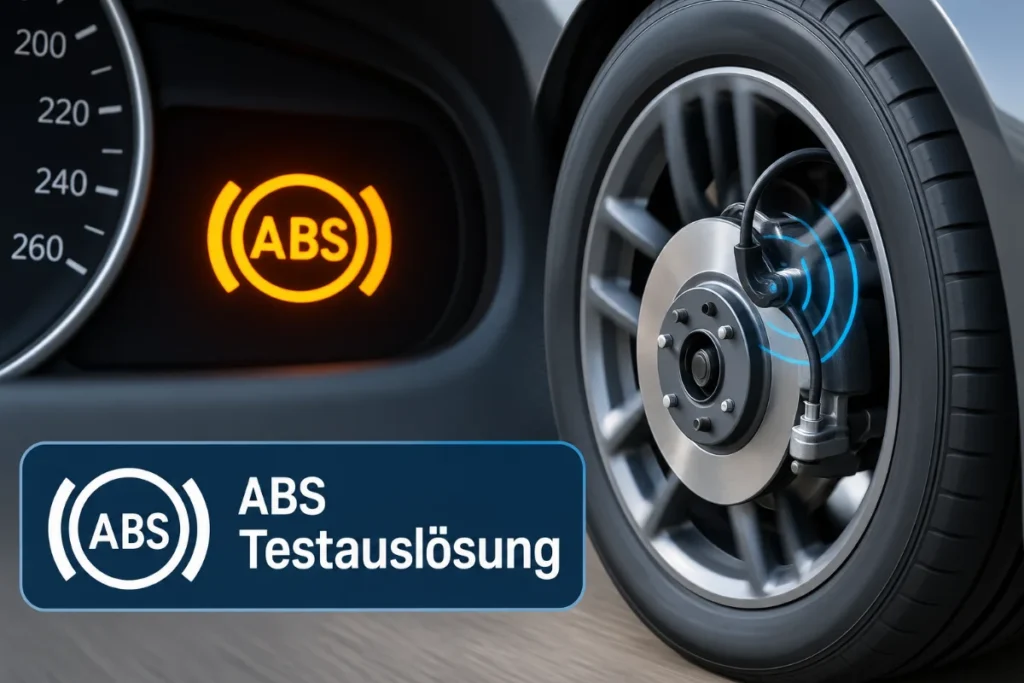
The term ABS Testauslösung is generally associated with testing, activating, or checking a vehicle’s anti-lock braking system (ABS). Depending on the context, it can refer to the automatic self-check performed by a vehicle or to a deliberate diagnostic test carried out using suitable equipment.
For most drivers, the most important point is simple a brief ABS check after starting the vehicle can be normal, while a warning light that stays on during driving may indicate a fault that needs investigation.
Modern ABS systems continuously monitor important components such as wheel-speed sensors, electronic control units, wiring, and hydraulic braking components. Understanding how these checks work can make it easier to recognize normal ABS behavior and identify situations that require professional attention.
What Does ABS Testauslösung Mean?
ABS Testauslösung can be translated roughly as ABS test activation or ABS test triggering.
ABS stands for Anti-lock Braking System. Its main purpose is to help prevent the wheels from locking during hard braking. By controlling brake pressure, ABS can help maintain tire contact and steering control when a driver has to brake suddenly.
The exact meaning of ABS Testauslösung depends on the context. It may describe:
- An automatic ABS self-test after switching on the ignition
- A system check performed while the vehicle begins moving
- A diagnostic procedure using specialized equipment
- Controlled activation of ABS-related components during servicing
- Testing of individual sensors or electronic systems
Because manufacturers use different ABS architectures and diagnostic procedures, there is no single test method that applies to every vehicle.
How Does an ABS Test Work?
An ABS system combines mechanical, hydraulic, and electronic components. The control unit receives information from wheel-speed sensors and uses that information to determine whether a wheel is approaching a locking condition.
A typical ABS monitoring process can involve several stages.
1. Vehicle Ignition Is Switched On
When the ignition is switched on, the vehicle’s electronic control modules become active.
The ABS warning light may illuminate temporarily as part of the vehicle’s system check. This does not automatically mean that the ABS has a fault.
If the system completes its check successfully, the warning indicator should behave according to the manufacturer’s specifications.
2. Wheel-Speed Sensors Monitor the Wheels
Wheel-speed sensors are among the most important components in an ABS system.
They continuously provide information about wheel rotation. The ABS control unit compares these signals and looks for unusual differences or signals that do not match expected vehicle behavior.
A damaged sensor, wiring problem, poor electrical connection, or damaged tone ring can interfere with this information.
3. ABS Activates During Hard Braking
If the system detects that a wheel is approaching lock-up during heavy braking, the ABS can rapidly adjust hydraulic brake pressure.
This process can happen several times within a short period.
During genuine ABS intervention, the driver may notice:
- Pulsation through the brake pedal
- Clicking or mechanical noises
- A rapid change in brake-pedal feedback
These sensations can be normal when ABS is actively regulating brake pressure.
However, drivers should never deliberately trigger emergency braking on public roads simply to test the ABS.
Why Does a Vehicle Perform an ABS Check?
The purpose of an ABS check is to help ensure that the system can perform its intended safety function and to identify faults when they occur.
Depending on the vehicle, the system may monitor:
- Wheel-speed sensors
- ABS control module
- Electrical power supply
- Wiring and connectors
- Hydraulic components
- Sensor signals
- Communication between control modules
- System plausibility and diagnostic information
The precise monitoring strategy varies between manufacturers and vehicle generations.
Which Components Are Checked During an ABS Test?
1. Wheel-Speed Sensors
Wheel-speed sensors measure how quickly individual wheels are rotating.
If one sensor produces an incorrect or inconsistent signal, the ABS control unit may identify a potential problem.
Possible causes include:
- Sensor damage
- Dirt or contamination
- Damaged wiring
- Corroded connectors
- Problems with the tone ring or encoder
2. ABS Control Unit
The ABS control unit processes information from the sensors and manages the system’s response.
A diagnostic fault involving the control unit does not necessarily mean the control unit itself has failed. The actual problem may be located elsewhere in the electrical or braking system.
3. Hydraulic Modulator
The hydraulic unit is responsible for regulating brake pressure when ABS intervention is required.
Depending on the vehicle design, it may contain valves, a pump, and other hydraulic components.
4. Wiring and Electrical Connections
Electrical faults can sometimes be difficult to identify.
A damaged wire, loose connector, corrosion, moisture, or poor electrical connection can cause an intermittent or incorrect ABS signal.
5. Tone Rings and Encoders
Many ABS systems rely on a rotating tone ring, encoder, or similar component to help the sensor determine wheel speed.
If the ring is damaged, contaminated, incorrectly positioned, or otherwise unable to provide a proper signal, the ABS system may detect a fault.
How Can You Tell if an ABS Test Is Normal?
A short ABS system check after switching on the ignition can be part of normal vehicle operation.
Some common signs of a normal startup check include:
- The ABS warning light briefly turns on.
- The system completes its initial check.
- The warning light then goes out according to the vehicle’s normal operating logic.
- No persistent ABS warning appears.
- Braking behavior remains normal.
The exact sequence differs between vehicles, so the owner’s manual should always take priority over general information.
What Does a Permanently Illuminated ABS Warning Light Mean?
A continuously illuminated ABS warning light should not simply be ignored.
It can indicate that the vehicle has detected a problem with the ABS or that the system’s functionality has been restricted.
Possible causes include:
- Faulty wheel-speed sensor
- Damaged sensor wiring
- Corroded electrical connector
- Tone-ring problem
- Electrical supply issue
- Communication fault
- ABS control-module fault
- Hydraulic-system problem
The warning light itself does not identify the exact cause.
A proper diagnostic procedure is needed to determine what has actually happened.
Can You Drive With the ABS Warning Light On?
The answer depends on the vehicle and the nature of the fault.
In some situations, the conventional braking system may continue to provide braking performance even when ABS is unavailable. However, the vehicle may no longer provide the anti-lock function the driver normally expects.
The situation becomes more concerning if additional warning lights appear or if the vehicle develops symptoms such as:
- Unusual brake-pedal behavior
- Reduced braking performance
- Brake fluid warnings
- Abnormal noises
- Changes in vehicle stability
- Other serious dashboard warnings
If braking performance feels abnormal, the vehicle should not simply be driven as normal. Professional inspection may be necessary.
How Can ABS Be Tested?
There are several levels of ABS testing.
1. Visual Inspection
A basic visual inspection can sometimes reveal obvious problems.
Depending on the vehicle and what can be safely accessed, a technician may inspect:
- Sensor wiring
- Electrical connectors
- Visible sensor damage
- Brake components
- Signs of contamination
- Obvious mechanical damage
A visual inspection, however, cannot confirm the complete condition of an ABS system.
2. Diagnostic Scan
A suitable diagnostic scanner can retrieve fault information from the ABS control module.
One important detail is that not every basic OBD scanner can access ABS systems. Some vehicles require manufacturer-specific or advanced diagnostic equipment.
3. Professional ABS Diagnosis
A workshop may perform additional tests, including:
- Reading ABS fault codes
- Monitoring live wheel-speed data
- Testing electrical circuits
- Checking power and ground connections
- Comparing sensor signals
- Testing certain actuators
- Inspecting hydraulic components
The exact diagnostic process depends on the vehicle’s design and the symptoms being reported.
ABS Testauslösung and Diagnostic Fault Codes
A diagnostic trouble code is a useful clue, but it is not always a complete diagnosis.
For example, a fault associated with a wheel-speed sensor does not necessarily prove that the sensor itself needs replacement.
The underlying cause could instead be:
- Broken wiring
- Poor connector contact
- A damaged tone ring
- Incorrect sensor positioning
- Electrical interference
- A problem with the control system
This is why replacing components based solely on a fault-code description can sometimes lead to unnecessary repairs.
| Area | Possible indication | Recommended investigation |
|---|---|---|
| Wheel-speed sensor | Implausible signal | Check sensor, wiring, and signal |
| Wiring | Open circuit or short circuit | Inspect cables and connectors |
| ABS control unit | Communication fault | Perform system-level diagnosis |
| Power supply | Voltage-related fault | Check battery and charging system |
| Tone ring/encoder | Irregular signal | Inspect sensor and rotating component |
The exact meaning of a diagnostic code should always be checked against reliable vehicle-specific technical documentation.
ABS Testing in Different Types of Vehicles
ABS technology is not identical across every type of vehicle.
1. Passenger Cars
Modern passenger cars often integrate ABS with other electronic braking and stability systems.
Depending on the model, ABS may communicate closely with systems such as electronic stability control.
2. Motorcycles
Motorcycle ABS systems are designed around the specific dynamics of two-wheeled vehicles.
Some modern motorcycles use more advanced systems capable of considering additional factors such as lean angle during braking.
3. Vans and Commercial Vehicles
Larger vehicles can have more complex braking and stability systems.
For these vehicles, manufacturer-specific diagnostic procedures can be particularly important.
4. Vehicles With ESP or ESC
ABS can form part of a larger electronic stability system.
As a result, a fault in one area may sometimes trigger multiple warning indicators.
ABS Statistics and Road Safety
ABS has become an important part of modern vehicle safety. Research from transportation authorities, road-safety organizations, vehicle manufacturers, and academic institutions has examined the relationship between ABS and braking performance and crash outcomes.
However, ABS statistics need to be interpreted carefully.
A statistic about the percentage of vehicles equipped with ABS is not the same as a statistic about crashes, injury reduction, or braking distance.
When publishing numerical claims about ABS, a reliable article should identify:
- The year of the study
- Country or region
- Vehicle category
- Number of vehicles or crashes examined
- Research methodology
- Original source
This is particularly important because vehicle technology and safety regulations change over time.
1. Why ABS Statistics Need Context
Statements such as “ABS reduces accidents by X%” can be misleading when presented without the underlying study.
Different research projects can examine different vehicle types, road conditions, driver behavior, crash types, and time periods.
For an E-E-A-T-focused article, statistics should therefore come from authoritative sources and should be clearly attributed rather than presented as universal facts.
ABS Testauslösung vs. Normal Braking
ABS intervention is different from ordinary braking.
| Feature | Normal Braking | ABS Intervention |
|---|---|---|
| Main purpose | Slow or stop the vehicle | Help prevent wheel lock during hard braking |
| Brake pedal | Usually smooth | May pulse rapidly |
| Electronic intervention | Not necessarily active | System actively regulates brake pressure |
| Noise | Usually limited | Mechanical or hydraulic regulation sounds may occur |
| Driver action | Normal controlled braking | Maintain firm braking while steering as necessary |
Brake-pedal pulsation during genuine ABS activation is generally a characteristic of the system doing its job.
It should not automatically be interpreted as a mechanical failure.
Common ABS Testing Mistakes
Some mistakes can make ABS diagnosis more difficult or even create unnecessary repair costs.
1. Ignoring the Warning Light
A persistent ABS warning should not be ignored simply because the vehicle still appears to brake normally.
2. Replacing Parts Without Diagnosis
Replacing an ABS sensor immediately after seeing a sensor-related fault code may not solve the underlying problem.
The wiring, connector, encoder, and signal should also be considered.
3. Using the Wrong Diagnostic Equipment
A basic OBD scanner may not communicate with every ABS control module.
Using equipment that cannot access the relevant system can result in incomplete information.
4. Testing ABS on Public Roads
Drivers should not deliberately perform emergency braking maneuvers on public roads just to see whether ABS activates.
Testing should be carried out in a controlled and appropriate environment by qualified personnel.
Frequently Asked Questions About ABS Testauslösung
Q1: What is ABS Testauslösung?
ABS Testauslösung generally refers to the testing, activation, or diagnostic checking of a vehicle’s anti-lock braking system. Depending on the context, it can describe an automatic self-test or a deliberate diagnostic procedure.
Q2: When does a car test its ABS?
Many vehicles perform an electronic system check when the ignition is switched on. The ABS system also monitors wheel-speed information while driving. The exact procedure depends on the manufacturer and vehicle model.
Q3: Is a short ABS check after starting normal?
It can be. Many vehicles perform an initial ABS-related check after ignition is switched on. The exact warning-light behavior and test procedure should be confirmed in the vehicle’s owner’s manual.
Q4: Why does the ABS warning light briefly come on?
The ABS warning light may illuminate temporarily during the vehicle’s startup system check. If it behaves normally afterward, this does not necessarily indicate a fault.
Q5: What does a permanently illuminated ABS light mean?
A permanently illuminated ABS warning light may indicate a detected fault or reduced ABS functionality. A diagnostic scan is normally needed to identify the underlying cause.
Q6: Can I test ABS myself?
You can perform a basic visual inspection and, with suitable equipment, retrieve diagnostic information. A complete ABS test may require specialized tools and professional knowledge.
Q7: How do you test an ABS sensor?
The testing method depends on the sensor type and vehicle. A technician may examine diagnostic live data, electrical signals, wiring, connectors, and the associated encoder or tone ring.
Q8: Can ABS faults be read with an OBD scanner?
Some OBD scanners can access ABS fault information, while basic devices may only communicate with the engine control system. The scanner must support the specific vehicle’s ABS control module.
Q9: How much does an ABS diagnostic check cost?
There is no universal price. Cost depends on the vehicle, location, workshop, diagnostic equipment, and complexity of the fault.
Q10: Can I drive with the ABS warning light on?
It depends on the fault. The conventional braking system may still operate in some situations, but ABS functionality can be impaired. If braking performance is abnormal or additional serious warning lights appear, the vehicle should be assessed before continued driving.
ABS Testauslösung: Quick Answer
ABS Testauslösung refers to the testing, activation, or diagnostic checking of a vehicle’s anti-lock braking system. Modern ABS systems monitor components such as wheel-speed sensors, control modules, wiring, and braking hardware.
A brief ABS check after starting the vehicle can be normal. A warning light that remains illuminated, however, may indicate a system fault and should be investigated using appropriate diagnostic procedures.
Final Thoughts
Understanding ABS Testauslösung can help drivers distinguish between normal ABS operation and signs that deserve attention.
A brief system check when starting the vehicle can be part of normal operation. During hard braking, ABS intervention can also produce noticeable pedal pulsation and mechanical sounds.
The situation is different when the ABS warning light remains on, diagnostic faults are stored, or braking behavior changes. In those cases, the safest approach is to identify the underlying cause rather than simply replacing parts based on a warning code.
Because ABS systems vary considerably between manufacturers and vehicle generations, vehicle-specific technical documentation should always take priority over general advice.
Important: This article provides general automotive information and is not a substitute for the manufacturer’s service documentation or professional brake-system diagnosis. If you experience abnormal braking performance or a serious brake warning, seek qualified assistance.
Please Read More Informative Articles:
Allysplay com | A Simple Guide to Gaming, Technology, and Digital Entertainment
Messonde | 7 Powerful Facts You Need to Know Today
Trinou Guide: 6 Things to Know Before Trusting It
Tozymagazine.com USA: 7 Things Readers Should Know

My name is Arman, and I am the founder of Last Magazine Pro, a digital publication dedicated to delivering high-quality content on business, technology, artificial intelligence, startups, investing, and leadership. I am passionate about creating informative, well-researched, and reader-focused content that helps people stay informed about the latest trends and innovations. My goal is to build a trusted platform that provides valuable insights, practical knowledge, and reliable information for professionals, entrepreneurs, and curious readers around the world.