Hybrid Consoles: One Device, Endless Gaming Possibilities
Source:https://lastmagazinepro.com/
Hybrid consoles have changed the way people think about video game hardware. Instead of forcing a choice between a big-screen setup and a portable device, these systems let you do both with a single machine. That flexibility is exactly why hybrid gaming has exploded in popularity over the last several years — busy schedules, small living spaces, and a growing appetite for gaming on the move have all pushed players toward devices that can keep up wherever they are. This guide breaks down what hybrid consoles actually are, how they work, what sets them apart from traditional and handheld-only systems, and how to pick the right one for your gaming habits.
What Are Hybrid Consoles?
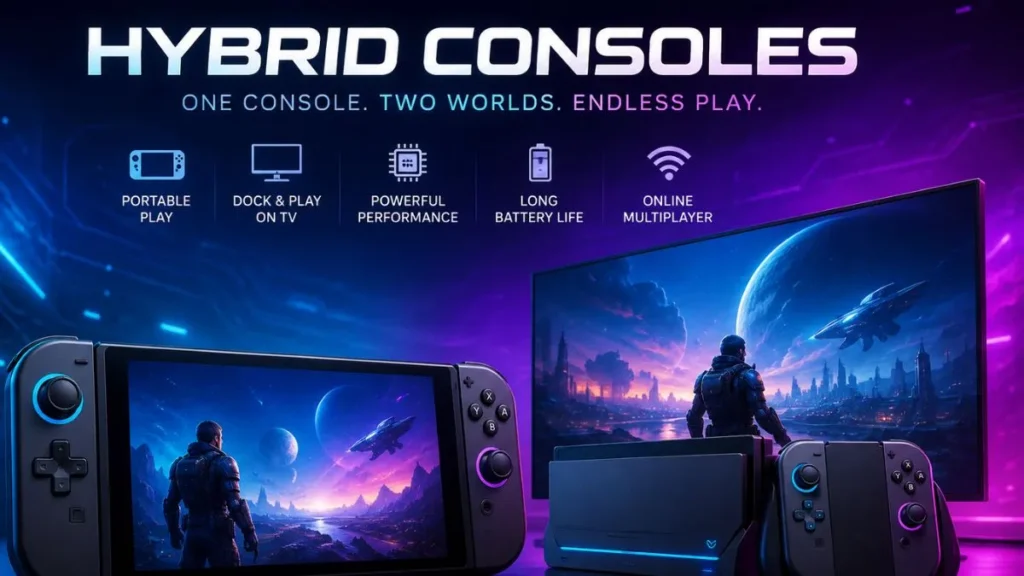
A hybrid console is a gaming system built to function as both a home console and a portable device. At its core, it’s a single unit with a built-in screen that can be played on its own like a handheld, then connected to a television or monitor for a bigger, more immersive session.
The defining trait isn’t just “it has a screen” — plenty of devices have that. What makes a console truly hybrid is that the same game, save file, and hardware move seamlessly between modes. You’re not switching devices; you’re switching contexts.
This is a meaningful departure from traditional consoles, which are built exclusively around a fixed television setup and stay put once installed. Hybrid systems are designed for people who don’t want to be tied to one room, one screen, or one seating position. That includes commuters, students in shared housing, parents who need to referee screen time from the kitchen, and travelers who don’t want gaming to stop just because they left home.
How Do Hybrid Consoles Work?
Hybrid consoles rely on a combination of compact internal hardware, a docking or connection system, and software that adapts on the fly to whichever mode you’re using.
1. Handheld Gaming Mode
In handheld mode, the console runs entirely on its internal battery and built-in display. The hardware scales performance to conserve power — this usually means slightly reduced resolution or frame rate compared to docked play, since the chip inside a device you can hold in two hands has real thermal and battery limits that a plugged-in home console doesn’t.
2. TV or Docked Gaming Mode
Docked mode is where a hybrid console behaves more like a traditional home system. Once connected to a TV — usually via a dock, an HDMI cable, or a direct port — the console can push more power to the processor and graphics chip, since it’s now drawing from wall power and has better cooling. Games often render at a higher resolution in this mode.
3. Switching Between Gaming Modes
The switch between handheld and docked play is usually instant. Pull the console out of its dock, and the display kicks back on; slide it back in, and the TV output takes over. Your save progress, settings, and even your place mid-match carry over without any manual syncing, which is part of what makes the format feel so effortless in daily use.
4. Controllers and Accessories
Most hybrid consoles ship with detachable controllers that can be used while docked, attached to the sides of the unit for handheld play, or connected separately as standalone gamepads. This modularity is part of the appeal — one controller setup adapts to however you’re currently playing rather than requiring separate peripherals for each mode.
What Makes Hybrid Consoles Different?
- Portability — the entire gaming experience travels with you, no separate handheld required.
- Flexible display options — built-in screen, external monitor, or television, all from one device.
- Docking capabilities — a quick, tool-free way to move between modes.
- Shared game libraries — buy a game once, play it in either mode without a second purchase.
- Multiplayer possibilities — some hybrid systems support local multiplayer using detachable controllers, even without a second console.
Key Features to Look for in Hybrid Consoles
Not all hybrid consoles are built the same, and the “best” one really depends on your priorities. Here’s what tends to matter most:
- Processing performance — determines frame rate, load times, and how demanding a game can be.
- Display quality — resolution, panel type (LCD vs. OLED), and brightness affect how games look in handheld mode.
- Battery life — varies significantly by game and screen brightness; heavier titles drain the battery faster.
- Storage capacity — modern games are large, and internal storage fills up quickly without expandable options.
- Controller options — detachable, standalone, or third-party compatibility.
- Connectivity — Wi-Fi stability, Bluetooth support, and wired options for competitive play.
- Game library — the depth and exclusivity of available titles.
- Build quality — durability matters more here than on stationary consoles, since hybrid devices get handled, packed, and traveled with far more often.
Hybrid Consoles vs Traditional Consoles
| Feature | Hybrid Consoles | Traditional Consoles |
|---|---|---|
| Portability | High | Limited |
| TV Gaming | Yes | Yes |
| Handheld Gaming | Yes | Usually no |
| Flexibility | High | Moderate |
| Travel Convenience | High | Low |
The trade-off is fairly straightforward: traditional consoles typically offer more raw graphical power because they aren’t constrained by battery life or portable-sized components, while hybrid consoles trade some of that power for the freedom to play anywhere.
Hybrid Consoles vs Handheld Gaming Devices
It’s easy to lump hybrid consoles in with dedicated handheld devices, but the two serve different purposes.
- Performance — dedicated handhelds built for portability-first use sometimes outperform hybrids in raw specs, but hybrids close the gap by scaling up when docked.
- Screen experience — handhelds are optimized purely for the built-in display; hybrids have to balance handheld and TV output.
- Portability — handhelds are generally lighter and more pocket-friendly, since they don’t need to support a dock or TV mode.
- Game availability — hybrid consoles often draw from a larger, more established library since the same titles work in both modes.
- Connectivity — both typically support Wi-Fi and Bluetooth, though hybrid systems more consistently support wired TV connections.
- Multiplayer experience — hybrids tend to have an edge here thanks to detachable controllers and native local multiplayer support.
Benefits of Hybrid Consoles
- Play at home or on the go — one purchase covers both use cases.
- Greater gaming flexibility — switch modes based on mood, time, or who else needs the TV.
- One device for multiple gaming situations — commuting, traveling, couch gaming, or a quick session in bed.
- Convenient multiplayer options — share a controller or connect a second console for local play.
- Better travel compatibility — no need to pack a separate handheld and home console.
Limitations of Hybrid Consoles
- Battery-life considerations — demanding games can drain a full charge in just a couple of hours.
- Hardware compromises — components are chosen for balance across both modes, not maximum power in either.
- Storage requirements — internal storage fills fast, and expansion options can be costly.
- Potential accessory costs — extra controllers, docks, and carrying cases add up over time.
- Performance differences compared with dedicated home consoles — graphically intensive titles usually look and run better on a console built exclusively for TV play.
Who Should Consider a Hybrid Console?
- Frequent travelers who don’t want gaming downtime during flights or commutes.
- Casual gamers who want one simple system rather than juggling multiple devices.
- Families who need a console that can move between rooms or hand off between kids.
- Multiplayer players who value quick, local co-op without extra hardware.
- Gamers who want both handheld and TV experiences without buying two separate systems.
How to Choose the Right Hybrid Console
1. Consider Your Gaming Style
Think honestly about how you’ll actually use the device. If most of your play happens on the couch, docked performance matters more. If you’re gaming on trains or during breaks, prioritize battery life and handheld screen quality.
2. Check Performance and Battery Life
Look at benchmarks and real-world battery tests for the specific games you plan to play — a system can technically last “up to” a high number of hours while dropping fast on graphically heavy titles.
3. Compare Game Libraries
A hybrid console is only as good as what you can play on it. Check for the exclusives and third-party titles that matter to you before committing.
4. Consider Storage and Accessories
Factor in the cost of extra storage, controllers, and a case — these aren’t always included and can meaningfully raise the total price.
5. Set a Realistic Budget
Account for the console, at least one extra controller, storage expansion, and protective accessories. The sticker price rarely reflects the full cost of a comfortable setup.
The Future of Hybrid Consoles
Hybrid gaming is still evolving, and a few trends are shaping where it goes next:
- More powerful portable hardware closing the performance gap with traditional consoles.
- Better battery technology extending handheld sessions without adding bulk.
- Cloud gaming integration offloading demanding processing to remote servers.
- Improved displays, including higher refresh rates and OLED panels becoming standard rather than premium.
- AI-assisted gaming features, from smarter upscaling to adaptive performance tuning.
- Greater cross-platform connectivity, making it easier to pick up a game across different devices.
Frequently Asked Questions About Hybrid Consoles
1. What is a hybrid console?
A hybrid console is a gaming system that works as both a portable handheld and a home console. It has a built-in screen for on-the-go play and can connect to a TV through a dock for a larger, more powerful gaming experience, all using the same hardware and game library.
2. Are hybrid consoles good for gaming on the go?
Yes. Hybrid consoles are specifically designed for portability, with a built-in display and battery that let you play without a TV. Battery life varies by game, so demanding titles will drain the charge faster than lighter ones, but for most on-the-go sessions, they hold up well.
3. Can hybrid consoles connect to a TV?
Yes. Most hybrid consoles use a dock or direct HDMI connection to output to a television, switching automatically to docked performance mode for sharper visuals and, often, better frame rates than handheld play.
4. Are hybrid consoles better than traditional consoles?
It depends on what you value most. Traditional consoles typically deliver stronger raw performance since they aren’t limited by battery or portable components. Hybrid consoles trade some of that power for flexibility, letting you play anywhere without owning a second device. Neither is universally “better” — it comes down to how and where you actually game.
5. What should I consider when buying a hybrid console?
- Your typical gaming style (handheld vs. docked vs. both)
- Battery life for the games you play most
- Available storage and expansion costs
- The strength of the game library
- Total cost including controllers and accessories
Final Verdict: Are Hybrid Consoles Worth Considering?
Hybrid consoles earn their popularity by solving a real problem: the old choice between a stationary home setup and a separate portable device. They offer strong flexibility, a shared game library across modes, and genuine travel convenience, though that comes with trade-offs in raw performance and battery endurance compared to dedicated home hardware. They tend to make the most sense for travelers, families, casual players, and anyone who wants one system instead of two. For gamers weighing convenience against maximum power, hybrid consoles are worth serious consideration — they won’t be the right fit for every player, but for the way most people actually game today, they hit a practical middle ground that’s hard to beat.
Read More Informative Articles Please Visit This Site:https://lastmagazinepro.com/

Sobia is an SEO Expert and Content Writer specializing in keyword research, SEO optimization, and engaging content that improves search rankings, drives organic traffic, and enhances online visibility.