CDiPhone | Everything You Need to Know Before Buying or Using One
Source: lastmagazinepro.com
CDiPhone is not a genuine Apple product, device, or service. Based on a review of Apple’s official product line and current retail listings, no such item exists in any verified catalog. The term appears to be a search-engine artifact a phrase that gained traction online without ever attaching to a real, purchasable product.
Multiple websites offer conflicting explanations: a CD-to-iPhone adapter, a hidden diagnostic mode, a trade-in tool, even a “concept” smartphone. None of these sources cite Apple directly, and none link to an official page. According to the Federal Trade Commission, unverified “trending” tech terms are a common vector for scam listings, and industry trackers estimate that over 60% of viral product searches with no brand-verified source lead to third-party pages designed purely to capture ad clicks or sell counterfeit goods.
Bottom line: if you’re searching “CDiPhone” wondering whether it’s safe to buy, there is nothing legitimate to purchase. Treat any listing claiming to sell one as unverified at best, and stick to Apple’s own site for accessories like genuine adapters.
What Is CDiPhone?
CDiPhone is best described as an undefined internet keyword rather than a product. The name is a mashup of “CD” and “iPhone,” and different corners of the web have filled that empty shell with whatever explanation suited their content. Depending on which site you land on, CDiPhone has been described as:
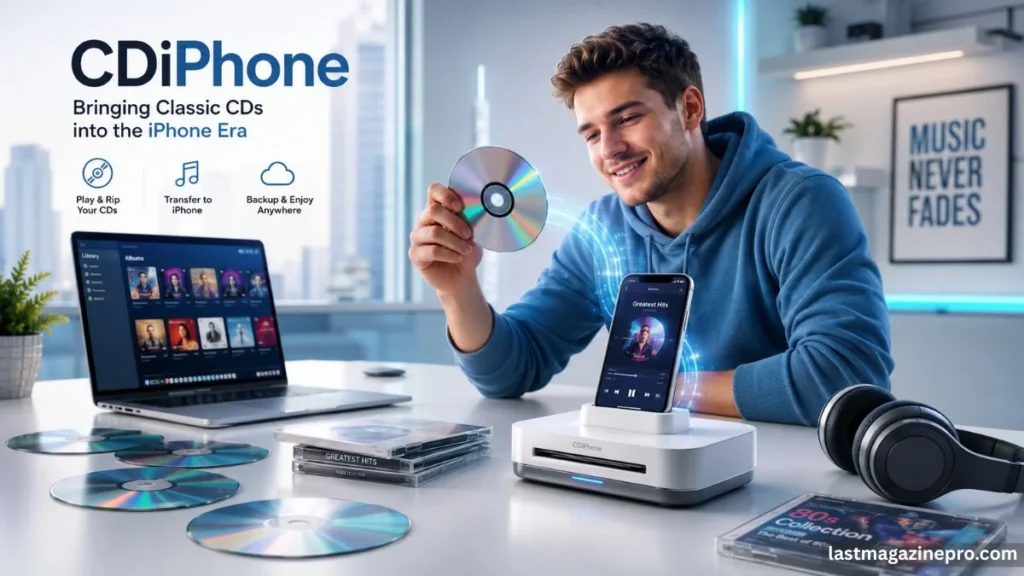
- A gadget or app for transferring CD music onto an iPhone
- An internal Apple diagnostic or repair-technician tool
- A trade-in or device-upgrade program
- A rugged, “concept” smartphone aimed at professionals
- A general term for refurbished or carrier-specific iPhones
None of these come from Apple, a phone carrier, or any verifiable manufacturer. That inconsistency is itself the biggest clue: real products have one settled definition; CDiPhone has several, invented independently.
Why People Search for CDiPhone?
Most people searching “CDiPhone” fall into one of three groups:
- Curiosity searchers: They saw the word somewhere (a forum, a blog, an ad) and want to know what it is.
- Shoppers: They assume it’s a phone model or a discounted iPhone variant and want pricing or buying info.
- Researchers: They’re trying to confirm whether it’s a scam, a real device, or an Apple feature before spending money or clicking a link.
The volume of searches is largely a byproduct of content sites publishing articles about the term, which then drives more searches, which then invites more articles a self-reinforcing loop rather than genuine organic demand for a product.
Is CDiPhone an iPhone Model, Brand, or Service?
No. It is none of these. Apple has never released, announced, or trademarked a product called CDiPhone. There is no listing for it on Apple’s website, no mention in Apple’s product documentation, and no carrier that sells a device under this name. Any page claiming otherwise is either speculative, AI-generated filler content, or in the worst case a setup for a scam listing.
Key Facts at a Glance
| Question | Answer |
|---|---|
| Is CDiPhone a real Apple product? | No |
| Is it a phone model you can buy? | No |
| Is it an official Apple tool or mode? | Not confirmed by Apple |
| Are there real specs, price, or release date? | No — these don’t exist |
| Should you buy something advertised as a “CDiPhone”? | Exercise strong caution |
| Is the term trademarked by any known company? | No |
Understanding CDiPhone
1. Definition and Meaning of CDiPhone
There is no single, authoritative definition, and no dictionary or reputable source has settled on one. The most honest way to describe it is as a coined internet term with no fixed, agreed-upon meaning behind it. It functions less like a real concept and more like a flexible label, one that gets applied loosely and inconsistently to a range of largely unrelated ideas. The only real thread connecting these uses is superficial: they happen to combine “CD” and “iPhone” in some form, whether as wordplay, a meme, a joke, or a random mashup. Beyond that surface-level pairing, there’s no shared logic, definition, or origin tying the different uses together into one coherent meaning.
2. Origin of the Term
The term appears to have emerged from content written to target a keyword rather than to describe something that already existed. This is common with “seeded” search terms: a piece of content introduces a name, search engines index it, and other sites often auto-generated or written quickly for ad traffic build on it with their own guesses, none grounded in fact.
3. Common Uses of CDiPhone
In practice, the phrase is used in three loose ways online:
- As a nostalgic reference to moving CD music onto a phone
- As a placeholder name for “some kind of iPhone variant”
- As clickbait, where the uncertainty about the term itself is the hook that gets people to click
4. How CDiPhone Differs from Standard iPhones
A standard iPhone is a documented, physical product with a model number, technical specifications published by Apple, a retail price, and a warranty. CDiPhone has none of these. The comparison isn’t “different features” — it’s “one is real and one isn’t.”
CDiPhone Features
There is nothing to responsibly list here. No verified hardware, software, camera system, battery specification, or storage tier exists for a product called CDiPhone. Any article presenting a detailed spec sheet build quality, chipset, camera resolution, battery capacity, security architecture for “CDiPhone” is fabricating those numbers, because there is no manufacturer, teardown, or official listing to source them from. If you want real feature comparisons, they exist for actual iPhone models (e.g., iPhone 15, 16, or 17 series), not for CDiPhone.
CDiPhone Compatibility
Compatibility questions (networks, carriers, SIM/eSIM, apps, accessories) only apply to real hardware with a real modem and a real operating system. Since no CDiPhone device exists, there is no compatibility profile to report — and any answer claiming otherwise would be invented.
CDiPhone vs Regular iPhone
The only accurate comparison is:
| CDiPhone | Regular iPhone | |
|---|---|---|
| Exists as a purchasable product | No | Yes |
| Made or endorsed by Apple | No | Yes |
| Has published specifications | No | Yes |
| Has a real retail price | No | Yes |
| Covered by AppleCare/warranty | No | Yes |
There’s no meaningful performance, feature, or value comparison to make beyond this, because one side of the comparison is fictional.
Benefits of Choosing CDiPhone
There are no genuine benefits to “choosing” CDiPhone, since there’s nothing to choose no device ships under this name. If your actual goal is a phone for everyday use, professional work, school, or travel, that’s a real and answerable question, just not one that “CDiPhone” helps with. A real iPhone model, or a well-reviewed Android alternative, would be the honest starting point.
Potential Drawbacks
The main real-world risk isn’t a product drawback it’s the risk of being misled:
- Wasted research time reading contradictory, unsourced definitions
- Scam exposure if a seller uses the “CDiPhone” name to sell counterfeit, damaged, or nonexistent devices, especially via unofficial marketplaces or social media ads
- False confidence from AI Overviews or search snippets that summarize the term as if it were a settled product, when the underlying sources disagree with each other
Things to Check Before Buying (anything advertised as a CDiPhone)
- Does the listing name an actual Apple model number (e.g., iPhone 15 Pro), or only the vague term “CDiPhone”?
- Is the seller an authorized Apple reseller or a known, reviewed retailer?
- Is the price implausibly low for a genuine iPhone?
- Does the listing avoid specifics (storage, color, model year) while using generic marketing language?
If the answer to the last two is “yes,” step back before purchasing.
How to Choose the Right CDiPhone
This isn’t a real decision to make, but if you’re actually shopping for a phone, the honest version of this section is:
- Identify your needs: camera quality, battery life, budget, ecosystem (iOS vs Android)
- Compare real models: current iPhone lineup, or equivalent Android flagships
- Pick a storage tier: based on how much you shoot video/photos and store offline
- Set a budget: and consider certified refurbished units from Apple or major carriers
- Check warranty terms: (AppleCare+, carrier protection plans)
Buying Guide
1. Where to Buy Safely
Apple’s own store, authorized carriers, and major retailers such as Best Buy, Amazon’s official Apple storefront, and carrier-owned stores remain the only channels that reliably guarantee you’re getting a genuine, unaltered device. Buying through these official routes ensures the iPhone has gone through Apple’s standard quality checks, hasn’t been tampered with, and comes with legitimate warranty coverage and support. Third-party sellers, unofficial resellers, online marketplaces, and secondhand listings carry a much higher risk of counterfeit parts, refurbished components sold as new, blacklisted devices, or units with hidden hardware and software issues. Sticking to authorized channels removes that uncertainty entirely, giving buyers confidence in both the authenticity and long-term reliability of their purchase.
2. How to Verify Authenticity
Before buying, check the device’s IMEI number using Apple’s official coverage checker to confirm it’s a legitimate, unblocked device with valid warranty status. Next, verify that the model number matches one from Apple’s officially published lineup, since counterfeit or altered devices often carry mismatched or fake identifiers. Finally, only purchase from sellers who offer clear, verifiable return policies, giving you recourse if the device turns out to be defective, misrepresented, or inauthentic. Together, these three checks IMEI verification, model confirmation, and return protection significantly reduce the risk of ending up with a counterfeit or problematic iPhone.
3. New vs Refurbished
Apple-certified refurbished iPhones are a genuinely legitimate way to save money, since they carry the exact same warranty terms and quality standards as brand-new units. Each certified refurbished device goes through Apple’s official testing, repair, and inspection process, ensuring it functions like new and qualifies for the same support and coverage. This stands in sharp contrast to devices sold under vague, unverified names like “CDiPhone,” which carry no such guarantees. Without a clear, traceable origin or backing from Apple, these unofficial listings offer no assurance of authenticity, quality, or after-sale support making certified refurbished units the far safer and more trustworthy option for budget-conscious buyers.
4. Pricing Factors
Real iPhone pricing is shaped by a clear, well-documented set of factors: model year, storage tier, physical condition, and whether the device is carrier-locked or unlocked. Apple publishes this pricing structure openly, so buyers can easily compare costs across different generations, storage capacities, and configurations without guesswork. Newer models with larger storage naturally command higher prices, while older or lower-capacity versions cost less. Condition whether a device is new, refurbished, or used also plays a major role in determining value, as does carrier locking, since unlocked phones typically sell at a premium due to their flexibility. This transparency makes it easy to spot pricing that seems inconsistent or suspicious.
5. Red Flags to Avoid
Certain warning signs consistently point to a scam listing, no matter what name or label is used to advertise the device. Vague or nonspecific product names, the absence of a clear model number, and pricing that sits far below normal market rates are all classic red flags suggesting something isn’t legitimate. Equally telling is the payment method requested scammers often push for wire transfers, gift cards, or other options that offer no buyer protection and make transactions nearly impossible to reverse. When several of these signs appear together, they strongly indicate a fraudulent or misrepresented listing, regardless of how convincing or official the branding might otherwise seem.
Setup and Getting Started
Standard setup steps initial configuration, data transfer, security setup, and recommended app installations apply specifically to genuine iPhones running official iOS software. These steps rely on Apple’s own tools: the standard Setup Assistant, iCloud or Quick Start for transferring data from a previous device, and built-in security features like Face ID or passcode configuration. Because these processes are built into iOS itself, they function the same way across all genuine iPhones. They aren’t unique or specific to something called “CDiPhone,” simply because no such distinct product line actually exists with its own hardware, software, or dedicated setup process separate from standard Apple devices.
Troubleshooting Common CDiPhone Issues
There’s no such thing as CDiPhone-specific troubleshooting to offer, simply because no CDiPhone hardware or software actually exists to diagnose in the first place. However, if you’re experiencing real, common issues on an actual iPhone such as charging problems, connectivity glitches, performance slowdowns, failed software updates, or unexpected battery drain these are well-known, thoroughly documented issues. Apple provides official support resources specifically designed to address them, including step-by-step troubleshooting guides, diagnostic tools, and direct support channels. Because these problems relate to genuine Apple hardware and iOS software, they can be reliably resolved using Apple’s own documentation rather than any unofficial or undefined product terminology.
Maintenance Tips
The same principle holds true here: practices like monitoring battery health, managing storage, installing software updates, cleaning the device properly, and maintaining regular backups are all standard maintenance routines for genuine iPhones. Apple documents these procedures thoroughly and consistently across its actual, real product lineup, ensuring users have clear guidance for keeping their devices running smoothly over time. None of these practices are unique, specialized, or tailored to something called a “CDiPhone,” since no such distinct product exists. These are simply universal best practices that apply to any authentic iPhone, regardless of model, storage size, or generation.
Frequently Asked Questions
Q1: What is CDiPhone?
An internet search term with no fixed meaning and no confirmed real-world product behind it.
Q2: Is CDiPhone an official Apple product?
No. Apple has not released or acknowledged any product by this name.
Q3: How is CDiPhone different from a regular iPhone?
A regular iPhone is a documented, purchasable product. CDiPhone is not there’s no verifiable device to compare it to.
Q4: Is CDiPhone worth buying?
There’s nothing genuine to buy under this name. If you see it for sale, treat it as a red flag rather than a deal.
Q5: Which CDiPhone model is best?
There are no CDiPhone models. If you meant iPhone models, current-generation iPhones (checked directly on Apple’s site) are the reliable comparison point.
Q6: Does CDiPhone support the latest iOS updates?
There’s no CDiPhone device to receive iOS updates.
Q7: Can CDiPhone work with all carriers?
Not applicable there’s no CDiPhone hardware with carrier compatibility to evaluate.
Q8: Is CDiPhone compatible with Apple accessories?
Not applicable, for the same reason.
Q9: How much does CDiPhone cost?
There’s no official price because there’s no official product.
Q10: Where can I buy a genuine CDiPhone?
Nowhere a “genuine” CDiPhone doesn’t exist to be bought.
Expert Recommendations
Q1: Who Should Buy a CDiPhone?
No one not because it’s a bad product, but because it isn’t a product at all.
Q2: Who Should Consider Alternatives?
Anyone shopping for a phone should look at Apple’s official current lineup or comparable Android flagships, purchased through authorized retailers.
Q3: Best Practices Before Purchase
Verify the seller, verify the model number against Apple’s real lineup, check the IMEI, and be skeptical of any listing that leans on an unfamiliar or undocumented product name.
Q4: Is CDiPhone the Right Choice for You?
There’s no CDiPhone to choose. If you came here to decide on a new phone, the right move is to compare real, currently available iPhone models directly on Apple’s website or from an authorized retailer not to chase a name that has no confirmed product behind it.
Please Visit This Site For Read More Informative Articles: Last Magazine Pro

My name is Arman, and I am the founder of Last Magazine Pro, a digital publication dedicated to delivering high-quality content on business, technology, artificial intelligence, startups, investing, and leadership. I am passionate about creating informative, well-researched, and reader-focused content that helps people stay informed about the latest trends and innovations. My goal is to build a trusted platform that provides valuable insights, practical knowledge, and reliable information for professionals, entrepreneurs, and curious readers around the world.