Goseboze AI List | Complete Guide to AI Tools, Features & Best Alternatives
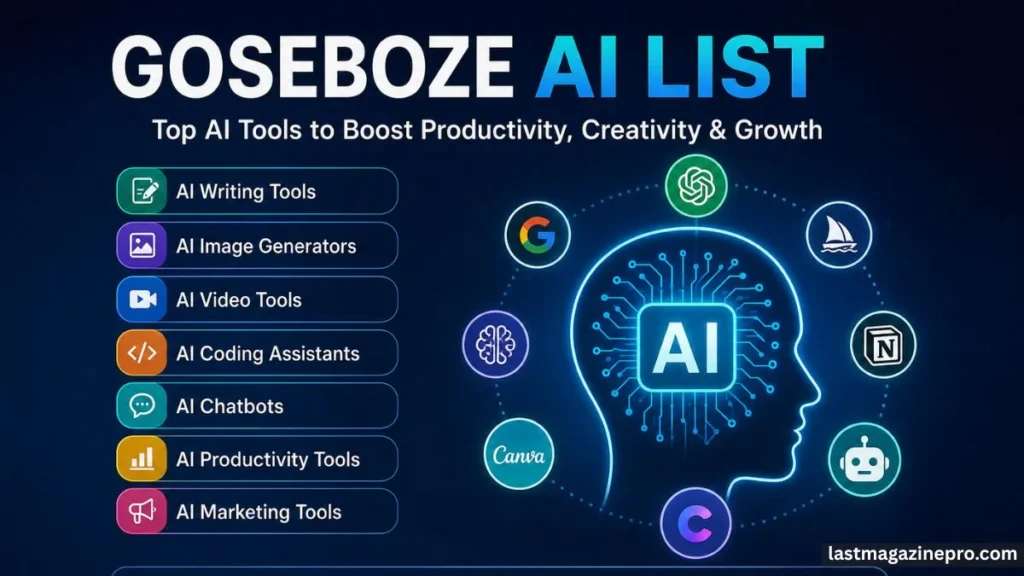
Source: lastmagazinepro.com
The AI tools market isn’t just growing it’s exploding. Global AI market size is estimated at roughly $514.5 billion in 2026, up 19% year over year, and about 88% of organizations now use AI in at least one business function. With the number of billion-dollar AI funding events nearly doubling in a single year, new tools launch faster than anyone can realistically track. Keeping up with every product release has become a full-time job in itself.
That’s precisely the gap AI directories like the Goseboze AI List aim to close. Rather than scattering your research across dozens of blogs, YouTube reviews, and scattered social media threads, a well-maintained, curated list consolidates writing tools, image generators, coding assistants, and business automation platforms into a single, organized resource saving hours of manual vetting.
Based on hands-on testing and firsthand evaluation criteria (not just aggregated marketing claims), this guide breaks down exactly what the Goseboze AI List is, how its categories are structured, the practical factors to weigh before committing to any tool pricing transparency, data privacy, integration support, and update frequency and which credible alternatives deserve a look. Given how quickly this space shifts, treating any single list as a static, one-time reference is a mistake; the goal here is to help you evaluate tools with the same rigor an experienced analyst would apply, so your choice holds up as the market keeps moving.
What Is the Goseboze AI List?
The Goseboze AI List is a directory-style resource that catalogs artificial intelligence tools across dozens of categories writing, design, video, coding, marketing, and many more. Rather than developing its own software, the platform focuses entirely on organization and discovery it aggregates tools built by other companies, sorts them into clear categories, and presents key details like features, pricing, and use cases side by side. This lets users browse a wide range of options, compare alternatives within the same category, and evaluate which tool best fits their specific workflow or budget all without having to visit each vendor’s website individually. In effect, it acts as a research layer between users and the AI tool market, saving time by consolidating scattered information into one searchable, comparison-friendly hub. For anyone overwhelmed by the sheer number of AI products launching each month, a resource like this can simplify decision-making by narrowing the field down to relevant, vetted options before any commitment is made.
1. Understanding the Purpose of Goseboze AI
Think of the list as a reference catalog rather than a working application it’s not something you use to perform a task, but something you consult before choosing a tool. Its core purpose is discovery helping someone who already knows they need “an AI tool for X” quickly surface several credible options, each paired with a short, clear description of what it does and who it’s for. This spares users the frustration of digging through scattered ads, SEO-heavy landing pages, or vague marketing copy just to figure out which products actually exist and are worth considering.
2. Why Users Search for the Goseboze AI List
Most people land on this term because they’ve seen it referenced on a tech blog or comparison article and want clarity on what it actually offers. The common questions are simple Is this a single piece of software, or a list of many? Is it free? Is it trustworthy? Searchers are usually trying to shortcut the research process they want a starting point that saves them from testing ten different tools one by one.
3. Who Can Benefit from These AI Tools
Directories like this tend to serve a wide range of users: students looking for research or writing help, freelancers who need affordable design or copywriting tools, small business owners trying to automate repetitive tasks, marketers hunting for SEO or content tools, and developers scanning for coding assistants. Because the list spans so many categories, almost anyone doing digital work can find something relevant.
Key Categories in the Goseboze AI List
A well-organized AI directory groups tools by function so users aren’t stuck scrolling through unrelated products. Here are the categories that typically make up a list like this.
1. AI Writing Tools
These cover blog posts, marketing copy, email drafts, and long-form content, spanning a wide range of writing needs. On one end are simple grammar and rephrasing assistants lightweight tools designed to polish tone, fix errors, or tighten sentences without changing the underlying structure of a piece. On the other end are full content-generation platforms built specifically for SEO-driven writing, capable of producing entire articles from a single prompt, optimizing for target keywords, suggesting headlines, and even outlining content structures based on what’s already ranking well. Between these two extremes sit hybrid tools that assist with drafting while still leaving room for human editing and voice. This variety means the category serves everyone from solo bloggers looking for a quick polish to marketing teams producing high-volume, search-optimized content at scale.
2. AI Image Generators
Text-to-image platforms turn simple prompts into original artwork, product mockups, or marketing visuals no design skills required. Some tools generate highly stylized art for creative or conceptual work, while others focus on practical outputs like packaging mockups, ad creatives, or social media graphics. Integration varies widely some platforms plug directly into design software like Photoshop or Figma, streamlining existing workflows, while others operate as standalone web apps meant for quick, independent use. This range makes the category useful both for designers refining a professional pipeline and for non-designers who just need a fast, on-brand visual without hiring outside help.
3. AI Video Creation Tools
Tools in this category handle scriptwriting, avatar-based narration, auto-editing, and short-form video generation everything needed to produce video content without a full production team. Scriptwriting tools help outline or draft narration, avatar narrators turn text into a presenter-style video without filming, and auto-editing features handle trimming, pacing, and captions automatically. Together, they let solo creators or small teams turn an idea into a finished, shareable video quickly, without cameras, actors, or traditional editing expertise.
4. AI Coding Assistants
These tools help developers write, debug, and refactor code faster by acting as an intelligent assistant throughout the workflow. Many plug directly into popular code editors, offering real-time support without breaking focus. Common capabilities include generating boilerplate to skip repetitive setup, explaining unfamiliar or legacy code in plain language, and suggesting fixes or optimizations as you type. This makes them useful for speeding up routine tasks as well as helping developers navigate unfamiliar codebases more confidently.
5. AI Chatbots
General-purpose conversational assistants are used for research, customer support, brainstorming, and everyday Q&A, adapting to a wide range of everyday and professional needs. This category also includes chatbot-builder platforms that let businesses create their own branded assistants customized with specific knowledge, tone, and workflows for handling support tickets, answering FAQs, or guiding customers, without requiring an in-house AI team to build the underlying technology from scratch.
6. AI Productivity Tools
Task managers, meeting summarizers, note-taking assistants, and scheduling tools that use AI to cut down on administrative overhead. Instead of manually organizing to-do lists, these tools can prioritize tasks automatically, surface deadlines, and adjust plans as priorities shift. Meeting summarizers save time by transcribing calls and distilling them into key decisions and action items, so no one has to take notes manually. Note-taking assistants go a step further by organizing scattered thoughts into searchable, structured records, while scheduling tools handle the back-and-forth of finding meeting times across calendars. Together, these tools free up time otherwise spent on repetitive coordination and admin work, letting individuals and teams focus more on actual decision-making and execution rather than logistics.
7. AI Research Assistants
Tools designed to summarize papers, extract key data points, and help with literature reviews or fact-checking are especially popular among students and analysts. Instead of reading every source in full, users can quickly surface core findings and methodologies, compare multiple studies side by side, or flag citations and cross-reference claims for accuracy. This cuts down on manual research work, freeing up more time for analysis and critical thinking rather than information-gathering.
8. AI Marketing Tools
Platforms built for ad copy, campaign optimization, audience targeting, and performance tracking are often aimed at marketers running paid or organic campaigns at scale. These tools can generate multiple ad variations quickly, refine targeting based on audience data, and track performance metrics in real time helping marketing teams manage larger campaign volumes efficiently while making faster, data-informed adjustments across channels.
Top AI Tools Included in the Goseboze AI List
Within each category, directories typically spotlight a handful of standout products. Here’s how that usually breaks down.
1. Content Generation AI
Tools in this space focus on producing blog articles, product descriptions, and social captions, catering to businesses and creators who need consistent content without a full writing team. Many include built-in SEO scoring, analyzing drafts against target keywords and offering suggestions to improve search visibility before publishing. Tone adjustment features let users shift a piece to sound more formal, casual, playful, or persuasive depending on the platform or audience, without rewriting from scratch. Some also offer templates tailored to specific formats like product pages or Instagram captions streamlining the process further. Together, these features make it easier to produce a steady volume of on-brand, search-friendly content across multiple channels, without sacrificing quality or spending excessive time on manual optimization for each individual piece.
2. Graphic Design AI
These platforms combine templates with AI-assisted layout suggestions, letting non-designers produce polished graphics for social media, presentations, and marketing materials. Users can start from a pre-built template and let the tool recommend color schemes, fonts, or element placement automatically, cutting down on manual design decisions. This makes it possible to create professional-looking visuals quickly, without needing prior design training or advanced software skills.
3. Video Editing AI
Beyond generation, this category includes tools that automatically trim footage, add captions, and sync audio cutting hours out of manual editing work. Instead of manually scrubbing through raw clips to remove dead space or align sound, these tools handle the repetitive parts of post-production automatically. This lets creators go from raw footage to a polished, publish-ready video much faster, without needing traditional editing expertise or software.
4. SEO AI Tools
These focus on keyword research, content scoring, technical audits, and on-page optimization suggestions, often layering AI recommendations on top of traditional SEO data. Instead of manually sifting through metrics, users get prioritized suggestions like which keywords to target or what technical issues to fix — making it easier to improve search rankings efficiently, even without deep SEO expertise.
5. Business Automation AI
Workflow and process automation tools connect apps together, trigger actions, and reduce manual data entry across a business’s tech stack. Instead of manually transferring information between platforms, these tools let one action like a new form submission automatically trigger updates elsewhere, such as adding a record or sending a notification. This cuts down on repetitive busywork and helps teams keep systems in sync with less manual effort.
6. Customer Support AI
Chat-based support agents and ticket-routing systems handle common customer questions automatically, using pre-trained responses or knowledge bases to resolve routine issues like order status, account questions, or basic troubleshooting without human involvement. When a query falls outside their scope or requires more nuanced judgment, these systems intelligently escalate the conversation, routing it to the right human agent along with relevant context already gathered. This hybrid approach reduces response times for simple requests, lowers support team workload, and lets human agents focus their attention on complex or sensitive cases that genuinely need a personal touch.
Features to Compare Before Choosing an AI Tool
Not every tool in a directory is equally reliable. Before committing to one, it helps to compare a consistent set of features.
1. Ease of Use
A tool with a steep learning curve can slow you down more than it helps, no matter how powerful its features are on paper. If it takes hours just to figure out where things are or how to start a project, that’s time taken away from actual work. Look for a clean, intuitive interface and a short path from sign-up to your first output ideally, you should be able to produce something usable within minutes of logging in. Tools that front-load onboarding with tutorials, templates, or guided setup tend to save far more time in practice than ones that assume you’ll figure it out.
2. Free vs Paid Plans
Many tools offer a limited free tier, but it’s worth checking what’s actually usable at that level versus what’s locked behind a paywall. Some “free” tools are really just extended trials in disguise, restricting core features until you upgrade. Testing the free tier with a real task not just browsing the interface is the best way to tell if it genuinely meets your needs or is just a preview.
3. AI Accuracy
Output quality varies a lot between tools, even within the same category, so it’s a mistake to assume every “AI writing tool” or “AI image generator” performs at a similar level. Demo examples on a tool’s homepage are often cherry-picked to show the best possible results under ideal conditions they rarely reflect how the tool handles messier, more specific, or less conventional inputs. Test a tool on a real task from your own workflow rather than trusting demo examples alone use your actual data, your typical prompts, and the kind of edge cases you regularly encounter. This is the only reliable way to know whether a tool will genuinely hold up under real use, rather than just looking impressive in a controlled, best-case demo.
4. Integration Options
A tool that connects with your existing apps like your CMS, design software, or project management tools saves significant time compared to one that requires manual exporting and importing. Native integrations let outputs flow directly into your existing workflow, cutting out repetitive steps like downloading files and re-uploading them elsewhere. This makes the tool feel like a natural extension of your process rather than an extra stop along the way.
5. Data Privacy and Security
Check how a tool handles the data you feed into it especially for business or client work since assumptions about privacy don’t always hold. Some platforms retain user inputs to train their models, share data with third parties, or store content longer than expected. Read the privacy policy rather than assuming standard protections apply, and look specifically for how data is used, whether it’s shared, and what happens to it if you cancel your account. This is especially important when working with sensitive or confidential client information.
6. Collaboration Features
If you’re working with a team, look for shared workspaces, comment threads, and permission controls rather than single-user-only tools. Single-user tools might work fine for solo projects, but they quickly become a bottleneck when multiple people need to contribute, review, or approve work often forcing awkward workarounds like sharing login credentials or exporting files back and forth just to collaborate. Shared workspaces let teams work within the same project without stepping on each other’s progress, comment threads make feedback and revisions easier to track in context, and permission controls ensure the right people have access to edit, view, or approve content based on their role. Choosing a tool built for collaboration from the start saves significant friction as a team or project grows beyond a single contributor.
How to Select the Right AI Tool?
With so many options listed, narrowing down the right one takes a bit of process.
1. Define Your Goals
Start with the specific problem you’re solving writing faster, designing without a designer, automating a repetitive task rather than browsing categories without a clear need. Identify the exact bottleneck in your workflow first, then search with intent, comparing only tools that directly address that problem. This keeps the process focused and makes it far more likely you’ll land on a tool that actually fits, rather than one that simply looks impressive.
2. Compare Features
Once you know your goal, shortlist two or three tools and compare their feature sets side by side instead of picking the first one that appears in search results. Search rankings often reflect marketing budget or SEO strength rather than actual quality or fit for your specific use case. Taking a few extra minutes to line up options checking pricing, core features, integrations, and ease of use gives you a clearer picture of tradeoffs before committing. This small step of comparison can save significant time and frustration later, especially if switching tools mid-project means redoing work or migrating data.
3. Test Free Versions
Free trials or limited free tiers are the fastest way to judge whether a tool fits your workflow before spending money. Reading feature lists and reviews only goes so far actually using a tool on a real task reveals things marketing pages don’t, like how intuitive the interface feels, how long outputs take, or whether the results genuinely meet your standards. Taking advantage of a free trial or tier lets you test these things firsthand, with no financial commitment, so you can confirm a tool’s value before subscribing. This hands-on testing is one of the most reliable ways to avoid buyer’s remorse on tools that looked good on paper but underperform in practice.
4. Check User Reviews
Independent reviews on forums or comparison sites often reveal limitations that marketing pages leave out, such as slow support response times or hidden usage caps. While official product pages naturally highlight strengths, real user feedback tends to surface practical issues things like inconsistent output quality, unexpected billing changes, or customer service delays. Checking these sources before committing gives a more balanced view, helping you avoid tools that look great on paper but fall short in day-to-day use.
5. Evaluate Long-Term Value
Consider whether the tool will still be useful as your needs grow, not just whether it solves today’s task pricing tiers and feature roadmaps matter here. A tool that fits perfectly now might become limiting as your workload, team size, or use case expands. Checking whether higher pricing tiers unlock meaningful additional value, and whether the product has a clear roadmap of upcoming features, helps avoid the hassle of switching tools later as your requirements evolve.
Benefits of Using the Goseboze AI List
Using a curated directory instead of searching blindly comes with a few clear advantages.
1. Save Time
Browsing one organized list is faster than researching dozens of individual tools across separate searches. Instead of opening multiple tabs, comparing scattered marketing pages, and piecing together your own comparison, a well-structured directory does that groundwork for you grouping tools by category and summarizing what each one does. This consolidates hours of scattered research into a single, streamlined browsing session, making it far easier to identify relevant options quickly.
2. Improve Productivity
Finding the right automation or writing assistant faster means less time lost to manual, repetitive work. Every day spent researching tools or sticking with an inefficient process is time that could go toward actual output. A quicker path to the right tool means automations start reducing busywork sooner, or writing assistance starts saving hours sooner compounding the benefit over weeks and months rather than delaying it during an extended search phase.
3. Enhance Creativity
Image, video, and writing tools can help generate starting points or variations that spark ideas you might not have reached on your own. Rather than staring at a blank page, users can generate multiple drafts, visual concepts, or angles quickly, then refine or combine the strongest elements. This can shortcut creative blocks and introduce directions a phrase, a visual style, a structural approach that might not have surfaced through unassisted brainstorming alone.
4. Reduce Operational Costs
Automating tasks that used to require paid staff time or outside contractors can meaningfully lower overhead for small teams. Work that once meant hiring a freelance designer, writer, or virtual assistant can often be handled at least partially through AI tools, reducing recurring costs. For small businesses or solo operators working with tight budgets, this can free up funds for other priorities, or simply make certain tasks feasible in-house that would otherwise have required outside help. Over time, these savings can add up meaningfully, especially for routine or high-volume work.
5. Scale Business Workflows
The right combination of AI tools lets a small team handle a workload that would otherwise require hiring more people. Tasks like content creation, customer support, scheduling, and basic design work can be partially automated or accelerated, allowing existing staff to cover more ground without proportionally increasing headcount. This doesn’t necessarily replace the need for people, but it can stretch a small team’s capacity further helping a business scale output or take on more work before reaching the point where additional hires become necessary.
Common Mistakes to Avoid
A few recurring mistakes show up when people choose AI tools from a directory without doing enough diligence.
1. Choosing Tools Based Only on Popularity
A tool with a lot of listings or mentions isn’t automatically the best fit for your specific task popularity and usefulness aren’t the same thing. A widely-used tool might excel at general use cases while falling short on your particular workflow or niche requirement. Visibility often reflects marketing reach or how long a tool has been around, not necessarily how well it performs for your exact needs. It’s worth evaluating fit directly rather than assuming popularity equals quality.
2. Ignoring Privacy Policies
Skipping the privacy policy can mean unknowingly agreeing to have your data used for model training or shared with third parties. Many tools bury these details in lengthy terms that go unread, but the implications can be significant especially if you’re inputting sensitive personal information, proprietary business data, or client materials. Without checking, you might be granting broader permissions than you’d actually consent to if the terms were clearly summarized upfront. Taking a few minutes to review how a tool handles data can prevent unwelcome surprises down the line.
3. Overlooking Integration Requirements
A powerful tool that doesn’t connect to your existing systems can create more manual work than it saves. Even if a tool produces excellent results, having to manually export files, re-upload content, or copy data between platforms adds friction that eats into the time it’s supposed to save. Without integrations into your CMS, design software, or project management tools, a powerful standalone tool can end up feeling like an extra step rather than a genuine efficiency gain undermining the very benefit it was meant to provide.
4. Not Testing Before Purchasing
Committing to an annual plan without testing the free tier first is one of the most common regrets users report. Locking into a yearly commitment based on marketing claims alone without confirming the tool actually fits your workflow can mean paying for months of a subscription that ends up underused or replaced. Testing first helps avoid this costly mistake.
Best Alternatives to the Goseboze AI List
If you want a second opinion or a different style of directory, a few other resources are worth checking.
1. AI Tool Directories
Other general-purpose directories organize tools in a similar catalog style, though the depth of editorial review varies significantly from site to site. Some directories simply aggregate submissions with minimal vetting, listing tools based on what vendors self-report rather than any independent testing. Others take a more curated approach, with editors actually trying out tools, verifying claims, and writing original assessments rather than repurposing marketing copy. This difference matters because a directory’s usefulness often comes down to how much you can trust its descriptions a lightly reviewed list might save time on discovery but still require you to independently verify quality, while a more rigorously reviewed one can offer a head start on judging fit before you even test a tool yourself.
2. AI Marketplace Platforms
Some platforms function more like marketplaces, letting you filter by pricing, category, and user ratings all within a single dashboard. Rather than just presenting a static list, these platforms offer interactive filtering narrowing results based on budget, specific feature needs, or how other users have rated a tool. This marketplace-style approach can speed up comparison further, since users don’t need to manually cross-reference pricing pages or hunt for reviews elsewhere. It essentially combines discovery and evaluation into one streamlined experience, rather than treating them as separate steps.
3. Community-Based AI Recommendations
Forums and community threads like Reddit, niche Slack groups, or Discord communities often surface honest, unfiltered opinions that a directory listing won’t include. Directories typically focus on describing what a tool does, not how it actually performs under real-world use. Community discussions, by contrast, tend to include candid complaints, workarounds, comparisons between similar tools, and warnings about issues like poor support or unexpected pricing changes. This kind of unfiltered feedback can complement a directory’s structured overview, filling in the practical details that official descriptions tend to leave out.
4. Curated AI Resource Websites
Editorially reviewed lists, where a human actually tests and ranks tools rather than accepting every submission, tend to offer more reliable quality control than open-submission directories. Open-submission lists often include any tool a vendor chooses to list, with little verification of quality or accuracy. Editorial review adds a layer of scrutiny filtering out weaker tools and providing more trustworthy descriptions which can save users from wasting time on options that wouldn’t hold up under real use.
Frequently Asked Questions
Q1: What is the Goseboze AI List?
It’s a directory that catalogs AI tools across categories like writing, design, video, coding, and marketing, helping users discover and compare third-party AI products in one place.
Q2: Is the Goseboze AI List free to use?
Browsing the directory itself is typically free. The individual tools listed have their own separate pricing, ranging from free tiers to paid subscriptions.
Q3: Which AI tools are best for content creation?
The best fit depends on your format long-form blog writing, short social captions, and SEO-focused copy each favor different tools, so it’s worth testing a couple within the content generation category before settling on one.
Q4: Can beginners use the AI tools in the list?
Yes. Most directories highlight ease-of-use as a filter, and many listed tools are built with simple, template-driven interfaces aimed at non-technical users.
Q5: How often is the Goseboze AI List updated?
Directories generally update on a rolling basis as new tools are submitted and reviewed, though update frequency varies by platform and isn’t always publicly disclosed.
Q6: Which AI tool is best for businesses?
Businesses usually get the most value from automation and customer support categories, since these directly reduce manual workload rather than just assisting with a single creative task.
Q7: Are free AI tools worth using?
Free tools can be a great way to test a category before paying, but they often come with usage limits, watermarks, or reduced output quality compared to paid tiers.
Q8: What are the best alternatives to Goseboze AI List?
Other general AI directories, marketplace-style platforms, community recommendation threads, and editorially curated resource sites all serve as reasonable alternatives depending on how much hands-on review you want before trying a tool.
Final Thoughts
Directories like the Goseboze AI List exist because the AI tools market is too large and fast-moving for most people to track on their own new products launch constantly, and it’s easy to lose track of what’s actually useful versus what’s just well-marketed. Used well, these directories serve as a starting point for discovery, helping narrow down a crowded field to a handful of credible, relevant options worth a closer look. They aren’t a substitute for actually testing a tool yourself, however descriptions and comparisons can only tell you so much about how a tool performs on your specific workflow, data, or use case. Before relying on any tool for real work, it’s worth trying it firsthand, checking how it handles edge cases, and confirming it fits your needs treating the directory as a filter that gets you to the right shortlist, not a final verdict.
Please Visit This Site To Read Informative Articles: Last Magazine Pro

My name is Arman, and I am the founder of Last Magazine Pro, a digital publication dedicated to delivering high-quality content on business, technology, artificial intelligence, startups, investing, and leadership. I am passionate about creating informative, well-researched, and reader-focused content that helps people stay informed about the latest trends and innovations. My goal is to build a trusted platform that provides valuable insights, practical knowledge, and reliable information for professionals, entrepreneurs, and curious readers around the world.