Matarecycler: 7 Powerful Recycling Tips for a Greener Future
Source:https://lastmagazinepro.com/
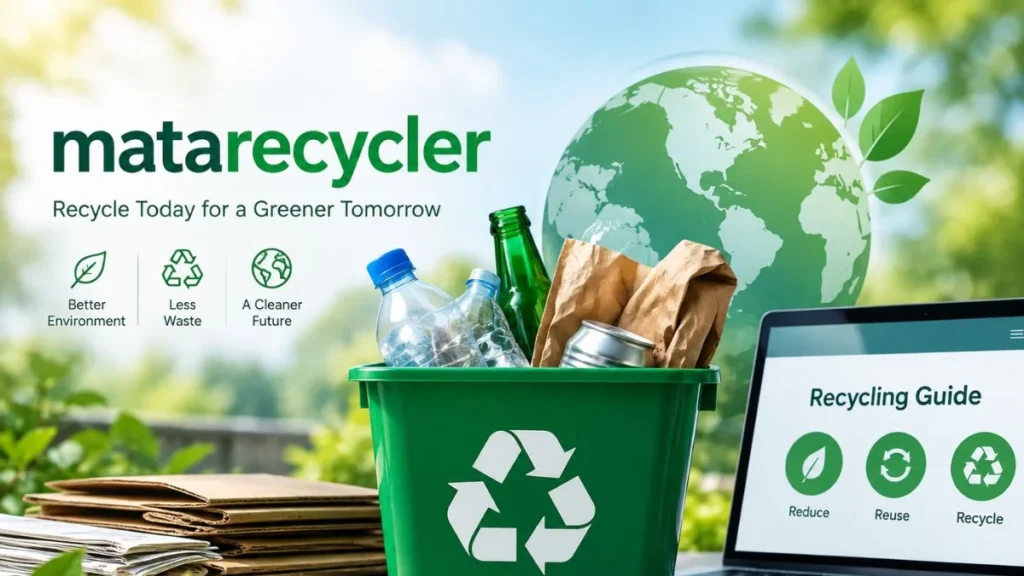
Matarecycler is a name used online for smart recycling technology: systems that pair cameras, sensors and AI to identify and sort waste. It isn’t tied to one confirmed company, so descriptions vary. This guide covers what the term usually means, how these systems work, and what to verify before trusting any claim.
If you’ve searched for matarecycler and found ten articles that all say the same thing, you’re not imagining it. Many of them repeat each other. Here you’ll get the idea behind the term, an honest look at how smart sorting works, and a checklist you can use on any recycling product.
What Is Matarecycler?
1. Understanding the name
The name looks like “material” plus “recycler,” or possibly a brand-style coinage. Nobody has published an authoritative origin, and that’s worth knowing. Be wary of any page that gives you a founding story, a headquarters, or a price list without naming where it came from.
2. What people mean when they use it
Two meanings show up:
- Smart recycling system (the dominant meaning). Sensor-equipped bins or sorting lines that use AI image recognition to identify materials, plus software that tracks what gets thrown away.
- Small-scale material recycler. A home or workshop device that shreds, melts or compresses plastics, metal or textiles into reusable raw forms.
This guide focuses on the first meaning, since that’s what most searchers expect. Most of the principles apply to both.
3. Why it matters for recycling
Recycling fails less from lack of effort than from lack of information. People don’t know what goes where, so the wrong items land in the wrong stream. A single greasy pizza box or a bag of wet food waste can lower the value of a whole load of paper. Smart sorting tries to catch that mistake at the moment it happens.
How Does Matarecycler Work?
A typical smart recycling setup follows these steps:
- Identify. A camera and sensors scan each item as it’s deposited or moves along a belt.
- Classify. AI estimates the material type: PET plastic, aluminum, cardboard, glass, and so on.
- Sort. The item is routed to the right compartment or output stream.
- Record. Software logs what was sorted, which can show contamination patterns.
- Collect. Cleaner, more uniform material is collected for processing.
- Reject. Items that can’t be recycled go to responsible disposal instead of contaminating good material.
1. Where the technology can go wrong
This is the part most competing pages skip. AI sorting struggles with crushed, dirty, dark-colored or multi-layer items. Black plastic is a well-known problem for optical scanners, and a chip bag made of mixed film looks recyclable but usually isn’t. Treat any “98% accuracy” claim as meaningless unless it names the test conditions and who ran the test.
What Materials Can Be Recycled?
Here is what’s generally recyclable and what to watch for. Always confirm against your local recycler’s rules, and against Matarecycler’s own documentation if you’re using a specific product.
| Material | Common examples | What to watch for |
|---|---|---|
| Paper and cardboard | Boxes, newspapers | Grease and food residue ruin it |
| Plastic | Bottles, tubs | Accepted types vary by region |
| Metal | Cans, foil trays | Usually highly recyclable if empty and clean |
| Glass | Bottles, jars | Often sorted by color; ceramics don’t belong |
| Electronics | Cables, small devices | Needs specialist e-waste handling |
| Textiles | Clothing, fabric scraps | Often handled through separate collection |
Key Features People Associate With Matarecycler
- AI material recognition, the headline feature.
- Data and reporting, such as which materials a building discards most.
- User guidance, like voice prompts or icons that tell people where an item goes.
- Routing and logistics, where pickups are scheduled around how full bins are.
Features differ between products, so confirm each one with whoever is selling or describing the system.
Benefits of Matarecycler
1. Environmental
Cleaner sorting can mean less recyclable material ending up in landfill and less contamination in each load. Better recovery also reduces demand for virgin raw materials. The size of those gains depends on the setup, the community and the material, so don’t trust one-size-fits-all numbers.
2. Economic
Cleaner material generally sells for more. Businesses can also use waste data to spot over-purchasing or packaging problems. Whether the savings cover the technology cost is a case-by-case question.
3. Practical
People hesitate over where things go. Prompts and visible feedback take that guesswork away, which is probably the most underrated benefit.
Matarecycler and the Circular Economy
A linear economy runs take, make, use, dispose. A circular one aims for take, make, use, recover, reuse. Smart sorting sits at the “recover” step. Without clean, well-sorted material, the loop breaks, because manufacturers can’t use what’s too contaminated to process. Sorting technology is a support for the circular economy, not a replacement for using less and reusing more.
Matarecycler vs. Traditional Waste Disposal
| Factor | Smart recycling approach | Traditional disposal |
|---|---|---|
| Material recovery | Higher potential when sorted well | Limited |
| Contamination feedback | Can flag mistakes in the moment | Rarely any feedback |
| Data | Tracks what’s discarded | Usually none |
| Cost and complexity | Higher setup and maintenance | Simpler and cheaper upfront |
| Reliability | Depends on tech and upkeep | Predictable, low-tech |
Smart systems aren’t automatically better. A well-run basic recycling program beats a poorly run high-tech one.
Who Can Benefit?
- Households that struggle with “is this recyclable?” decisions.
- Offices and schools where many people share bins and no one owns the problem.
- Retailers and businesses with steady, predictable waste streams such as cardboard or packaging.
- Cities and municipalities that want data on contamination and collection routes.
- Manufacturers that want cleaner scrap streams.
How to Evaluate or Use a Matarecycler-Type System
- Confirm who runs it. Find an official site, named organization or contact.
- Check what it accepts. Get the accepted-materials list in writing.
- Check your area. Confirm service availability and collection or drop-off rules.
- Prepare materials. Empty, rinse and flatten items.
- Follow the on-device or app guidance. If prompts conflict with local rules, local rules win.
- Watch the results. Check whether sorted material is actually being recycled, not just collected.
1. Questions to ask before committing
- Which materials and plastic types are accepted?
- Where does the sorted material go afterward?
- What does it cost, including maintenance?
- Is the accuracy figure independently tested?
- How is user and usage data stored and shared?
- Who do you call when it breaks?
2. Common Recycling Mistakes to Avoid
- Wishcycling. Tossing in uncertain items hoping they’ll be recycled. They usually contaminate the load.
- Dirty containers. A little residue is fine, but heavy food waste isn’t.
- Assuming all plastic is the same. The number on the bottom matters, and local acceptance varies.
- Bagging recyclables. Many facilities can’t open plastic bags and may reject the contents.
- Hazardous items. Batteries, aerosols and e-waste need their own disposal routes.
- Ignoring local rules. What’s accepted in one city can be rejected in the next.
Matarecycler for Businesses
For a business, the value is less about the gadget and more about the data and discipline. Start with a waste audit to see what you actually throw away. Set up clear, labeled streams. Train staff briefly, then track contamination monthly. Technology helps most when the basics already work. If you run commercial recycling or a sustainability program, ask vendors for references from similar-sized sites.
Matarecycler and Environmental Responsibility
Responsible recycling starts upstream. Reducing and reusing come before recycling in the standard waste hierarchy. A smart bin can’t fix over-packaging, but it can make the recycling step more honest and effective. Be skeptical of any claim of “tons of CO₂ saved” without a named methodology.
What’s Verified and What Isn’t
| Claim you’ll see online | Status |
|---|---|
| Matarecycler uses AI and sensors to sort waste | Widely repeated; no official source found |
| “40% more recyclables collected” | Repeated across sites; no named study found |
| “95–98% sorting accuracy” | Unsourced |
| Official company or product page | Not found in my search |
If you control the brand, publishing real data, test conditions and contact details is the single biggest trust signal you can add.
Frequently Asked Questions
Q1: What is Matarecycler?
It’s a term used online for smart recycling technology that uses AI and sensors to identify and sort waste. No single confirmed company or product is behind it.
Q2: How does Matarecycler work?
Cameras and sensors scan items, AI classifies the material, and the item is routed to the right stream while software logs the data.
Q3: What materials does it accept?
It depends on the specific system and your local recycler. Common categories are paper, metal, glass and certain plastics. Get the accepted list from the operator.
Q4: Is it available in my area?
Check the operator’s official service area, or ask your local waste authority. Don’t rely on third-party blog posts for availability.
Q5: Does Matarecycler cost money?
No verified pricing exists that I could find. Ask the provider directly.
Q6: Can businesses use it?
Smart sorting generally suits businesses with consistent waste streams, but confirm with the specific provider.
Q7: Is it environmentally friendly?
Better sorting can reduce landfill and contamination. Specific impact claims need evidence.
Q8: Where can I learn more?
Start with the official source if one exists [add official link], then your local waste or recycling authority.
Quick Facts
| Question | Answer |
|---|---|
| What is it? | A term for smart, AI-assisted recycling technology |
| Main function | Identify, sort and track recyclable materials |
| Typical users | Households, businesses, municipalities |
| Verified company | [add if applicable] |
| Service area | [add if applicable] |
| Official site | [add if applicable] |
Final Thoughts
Matarecycler, as the term is used today, points to a sensible idea: use technology to help people recycle correctly. The value is real when sorting is accurate and the recovered material is actually reused. The hype is easy to overstate. Before you trust any matarecycler claim, check who is making it, what evidence backs it, and what your local recycler actually accepts. Start by confirming one thing this week: what your local program takes.
Please Read More Informative Articles:
Allysplay com | A Simple Guide to Gaming, Technology, and Digital Entertainment
Messonde | 7 Powerful Facts You Need to Know Today

Sobia is an SEO Expert and Content Writer specializing in keyword research, SEO optimization, and engaging content that improves search rankings, drives organic traffic, and enhances online visibility.