Quartz Events Sponsor Matching Companies | 7 Powerful Sponsorship Tips
Source:https://lastmagazinepro.com/
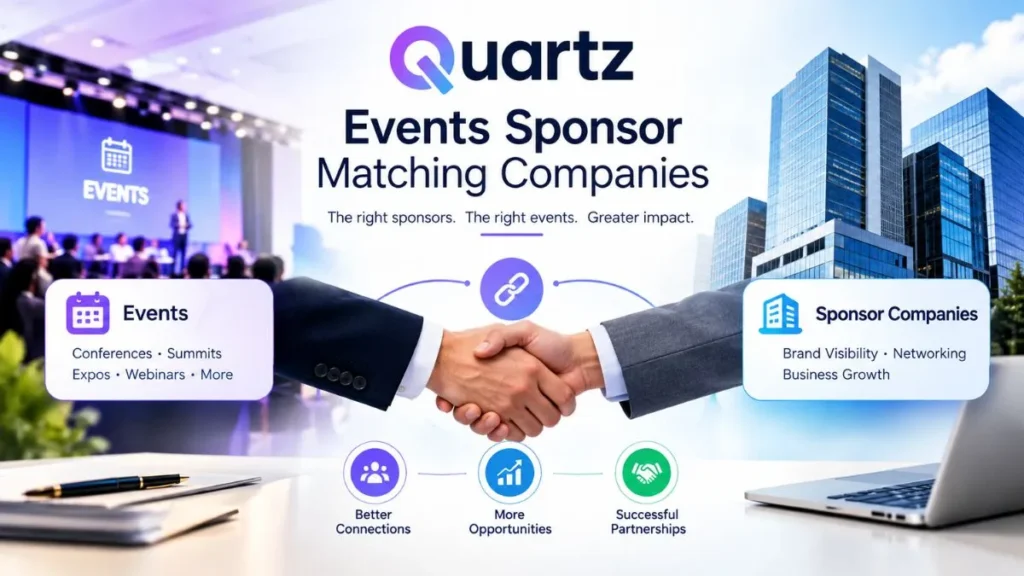
Finding a sponsor who actually fits your event is harder than it sounds. You can have a great turnout, a clear theme, and a compelling audience and still send out dozens of sponsorship pitches that go nowhere, simply because you’re pitching the wrong companies. This is the exact problem quartz events sponsor matching companies are built to solve.
Instead of cold-emailing a list of brands and hoping something sticks, sponsor matching services use audience data, industry alignment, and event goals to connect organizers with sponsors who are actually likely to say yes and stay on as long-term partners. In this guide, we’ll break down how sponsor matching works, why it matters for both event organizers and sponsors, and how to choose (or use) a matching service effectively.
What Are Quartz Events Sponsor Matching Companies?
Quartz events sponsor matching companies are services or platforms that connect events with businesses looking for sponsorship opportunities, using factors like audience demographics, industry, budget, and event goals to find a better fit than manual outreach typically produces.
At a basic level, these companies sit between two groups:
- Event organizers, who need funding, in-kind support, or brand partnerships to make an event happen
- Sponsors, who want visibility, leads, or brand association with an audience that matches their customer base
Traditional sponsorship outreach usually means an organizer builds a list of “logical” companies and sends the same generic deck to all of them. Sponsor matching flips that model it starts with data about the event and the sponsor’s ideal customer, then narrows the field to partnerships that are actually likely to work.
The result is fewer wasted pitches and ideally sponsors who stick around year after year instead of a one-time transaction.
How Does Event Sponsor Matching Work?
Most sponsor matching processes follow a similar sequence, whether it’s run by a dedicated platform or a sponsorship consultant.
1. Event Information Is Collected
Basic event details are gathered: format, size, location, timing, audience demographics, and past sponsor history if it exists.
2. Sponsorship Requirements Are Identified
The organizer defines what they actually need cash sponsorship, product donations, media partners, or venue/tech support and what they’re offering sponsors in return.
3. Potential Sponsors Are Evaluated
The matching service reviews a pool of businesses, filtering by industry, target customer, marketing goals, and typical sponsorship budget.
4. Businesses and Events Are Matched
Overlapping interests are identified for example, a wellness brand matched with a running event, or a fintech company matched with a startup conference.
5. Partnership Opportunities Are Reviewed
Both sides get a summary of what the partnership would look like: exposure, deliverables, and cost.
6. Sponsorship Discussions Begin
Once there’s mutual interest, the actual negotiation packages, pricing, deliverables happens directly between organizer and sponsor.
Why Businesses Look for Event Sponsorship Opportunities
Sponsors don’t hand out money for goodwill alone. They’re typically chasing one or more of these outcomes:
- Brand visibility in front of a relevant, captive audience
- Audience engagement through booths, demos, or activations
- Lead generation collecting contacts from people who match their buyer profile
- Industry networking with peers, partners, or potential hires
- Community presence, especially for local or regional businesses
- Brand credibility gained by association with a respected event
- New customer acquisition in a market segment they haven’t fully tapped
Understanding this list matters for organizers, too every pitch you send should speak directly to one or more of these motivations.
Why Event Organizers Need Sponsor Matching Companies
1. Finding Relevant Businesses
It’s easy to think of the five “obvious” sponsors in your niche. It’s much harder to identify the 50 companies outside your immediate radar who’d actually be a good fit.
2. Saving Time on Sponsor Research
Manually researching company budgets, marketing priorities, and past sponsorship activity takes hours per lead. Matching tools compress that research into a filtered shortlist.
3. Reaching New Sponsor Categories
Matching often surfaces sponsor types organizers wouldn’t have considered a software company sponsoring a trade event, for instance, instead of only the expected industry suppliers.
4. Improving Sponsorship Outreach
When a pitch is backed by real audience-fit data, it lands very differently than a generic “please sponsor us” email.
5. Creating More Relevant Partnerships
Better-matched sponsors tend to be more engaged during the event itself showing up, activating their booth, and actually using the exposure they paid for.
7 Ways Quartz Events Sponsor Matching Companies Can Improve Sponsorship
1. Identify Better-Fit Sponsors
When a sponsor’s target customer overlaps closely with your attendee base, the partnership performs better for both sides higher engagement, more leads, and a stronger case for renewal next year.
2. Reduce Manual Sponsor Research
Rather than spending days building spreadsheets of potential leads, matching systems narrow the field automatically based on event category, size, and audience.
3. Improve Audience-Sponsor Alignment
A sponsor whose product genuinely interests your attendees will get more value than one who’s simply the highest bidder and that value shows up in renewal rates.
4. Support More Personalized Outreach
Matching data audience breakdown, past sponsor performance, engagement stats gives organizers concrete talking points instead of vague promises of “great exposure.”
5. Expand Sponsorship Opportunities
Matching tools often surface sponsors outside an organizer’s existing network, opening up categories that wouldn’t have come up through referrals alone.
6. Improve Sponsorship Planning
Comparing multiple potential sponsors against clear event objectives makes it easier to prioritize outreach and build tiered sponsorship packages that make sense.
7. Build Long-Term Business Relationships
A sponsor who sees real ROI in year one is far more likely to return in year two and matching increases the odds of that first experience actually working.
What Should You Look for in a Sponsor Matching Company?
- Industry experience do they understand your event category specifically?
- Quality of sponsor database is it current, and does it include real budget-holders?
- Matching methodology is it based on real data, or just keyword overlap?
- Audience targeting how granular is their demographic and interest data?
- Communication support do they help facilitate intros, or just hand you a list?
- Transparency clear process, clear pricing, no vague promises
- Reporting and analytics can they show you match quality and outcomes?
- Pricing structure flat fee, commission, or subscription?
- Reputation and reviews what do other organizers say about results?
How to Choose the Right Sponsor Matching Service
1. Define Your Event Goals
Know what success looks like revenue target, number of sponsors, specific categories you want represented.
2. Understand Your Audience
The more specific your audience data (industry, job title, interests, location), the better any matching service can work with it.
3. Set a Sponsorship Budget
Decide what you’re willing to pay for matching services relative to expected sponsorship revenue.
4. Identify Suitable Industries
Come in with a rough sense of which sectors make sense for your event, even if the service expands that list.
5. Compare Matching Features
Look at how each platform actually generates matches algorithmic, manual curation, or a hybrid.
6. Review Previous Partnerships
Ask for case studies or references from events similar in size and format to yours.
7. Evaluate Communication and Support
Some services stop at the introduction; others help negotiate and manage the relationship. Know which one you’re paying for.
What Information Should Events Provide to Potential Sponsors?
- Event name and type
- Date and location
- Expected attendance
- Audience demographics
- Industry information
- Sponsorship packages and tiers
- Marketing and promotional opportunities
- Media exposure (press, social, livestream reach)
- Pricing
- Partnership benefits and deliverables
What Information Do Sponsors Usually Consider?
- Target audience match
- Expected reach and impressions
- Event reputation and track record
- Industry relevance
- Sponsorship cost versus expected ROI
- Brand exposure opportunities
- Lead-generation potential
- Networking value
- Previous event performance data
Quartz Events Sponsor Matching Companies vs. Traditional Sponsor Outreach
| Factor | Sponsor Matching | Traditional Outreach |
|---|---|---|
| Sponsor discovery | Matching-based, data-driven | Manual research |
| Research time | Lower | Higher |
| Targeting | Audience and event focused | Depends on individual effort |
| Personalization | Data-backed | Usually generic |
| Scalability | Higher | More resource-intensive |
How Technology Is Changing Event Sponsorship
- Data-driven sponsor discovery replacing cold lists
- Automated recommendations based on past sponsorship behavior
- Deeper audience analytics (interests, job roles, purchase intent)
- CRM integration so sponsor relationships aren’t lost in spreadsheets
- Digital sponsorship marketplaces connecting organizers and brands directly
- AI-assisted matching that improves as more sponsorship data accumulates
- Performance tracking that measures actual sponsor ROI, not just impressions
Common Mistakes When Matching Events With Sponsors
1. Choosing Sponsors Based Only on Budget
The highest bidder isn’t always the best long-term partner if there’s no audience overlap.
2. Ignoring Audience Compatibility
A mismatched sponsor gets little value and won’t renew, no matter how much they paid.
3. Using Generic Sponsorship Packages
One-size-fits-all tiers ignore that different sponsors want different things (leads vs. brand visibility vs. content access).
4. Failing to Define Sponsor Benefits
Vague promises of “exposure” don’t close deals. Specific, measurable benefits do.
5. Not Tracking Results
Without post-event data, there’s no case to make for renewal next year.
6. Overlooking Long-Term Partnerships
Chasing a new sponsor every year is more expensive than nurturing existing ones.
How to Create an Effective Sponsorship Proposal
1. Start With the Event Audience
Lead with who will be in the room sponsors care about this more than almost anything else.
2. Explain the Sponsor Opportunity
Be specific about what involvement looks like: booth space, speaking slot, logo placement, app integration.
3. Highlight Measurable Benefits
Use numbers attendance, past engagement rates, social reach wherever possible.
4. Present Sponsorship Packages Clearly
Tiered options (e.g., Gold/Silver/Bronze) make decision-making easier for sponsors comparing budgets.
5. Include Marketing Opportunities
Pre-event promotion, on-site activation, and post-event content all add value beyond the day itself.
6. Add Relevant Performance Data
If you have past sponsor results, include them real numbers build trust fast.
7. Make the Next Step Simple
End with a clear, low-friction call to action: a call, a reply, a signed agreement link.
Frequently Asked Questions
Q1: What are quartz events sponsor matching companies?
They’re services or platforms that connect event organizers with sponsors by evaluating audience fit, industry alignment, and sponsorship goals, rather than relying on manual, generic outreach.
Q2: How do event sponsor matching companies work?
They gather event details, define sponsorship needs, evaluate a pool of potential sponsors, and connect the ones with the strongest audience and goal alignment.
Q3: Why do companies sponsor events?
Mainly for brand visibility, lead generation, audience engagement, and credibility gained through association with a relevant event.
Q4: How can an event find suitable sponsors?
By clearly defining the audience, researching industries with genuine overlap, and using sponsor databases or matching services to narrow the field.
Q5: What makes a good event sponsor?
Audience relevance, brand alignment with the event’s values, budget compatibility, and shared goals for the partnership.
Q6: Is sponsor matching useful for small events?
Yes, smaller events often benefit even more, since niche audience data can surface highly specific sponsors that generic outreach would miss.
Q7: What should be included in a sponsorship proposal?
Audience details, expected reach, sponsorship packages, pricing, and clear promotional or engagement opportunities.
How to Measure Sponsorship Success
- Brand impressions generated
- Attendee engagement with sponsor content or booths
- Leads generated for the sponsor
- Website traffic driven from event mentions
- Social media engagement tied to the sponsorship
- Sales opportunities created
- Sponsor satisfaction (worth surveying directly)
- Overall return on sponsorship investment
Future of Event Sponsor Matching
- AI-powered recommendations that improve with more historical data
- More precise audience segmentation (interests, intent, not just demographics)
- Automated sponsor discovery replacing manual list-building entirely
- Real-time event analytics feeding back into future matches
- Personalized sponsorship packages built per sponsor rather than one-size-fits-all tiers
- Greater emphasis on measurable, provable results over vague “exposure” claims
Conclusion
Quartz events sponsor matching companies exist to solve a real problem: sponsorship outreach that’s based on guesswork instead of fit. By pairing events with sponsors whose audience, industry, and goals genuinely align, matching services help organizers land partnerships that actually perform and help sponsors get real value instead of a logo on a banner nobody notices.
The strongest sponsorships aren’t built on the size of a check. They’re built on shared goals between an event and a brand that both benefit from the same audience being in the room. Whether you’re an organizer building your first sponsorship deck or a sponsor evaluating your next event partnership, it’s worth evaluating potential matches carefully the fit matters more than the fee.
Read More Informative Articles:
-
IL Secretary of State Business Search: 7 Easy & Powerful Ways
-
Illinois LLC Search: 5 Easy Steps to Verify Any Business (2026 Guide)

Sobia is an SEO Expert and Content Writer specializing in keyword research, SEO optimization, and engaging content that improves search rankings, drives organic traffic, and enhances online visibility.