What Is Business? 7 Key Types, Meaning and How It Works
Source:https://lastmagazinepro.com/
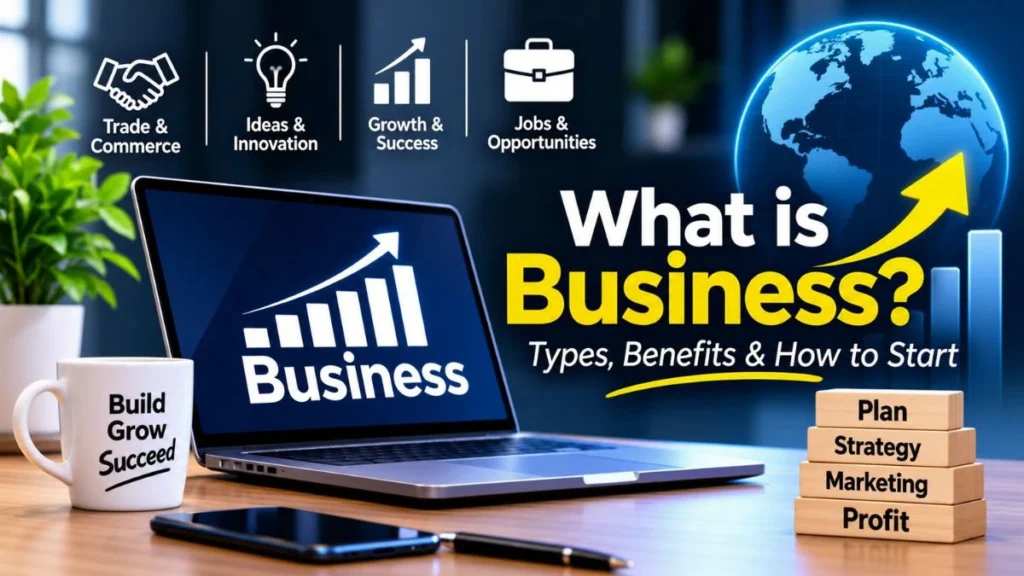
So, what is business? A business is an organization or individual that offers products or services to customers in exchange for money, with the aim of earning a profit and staying in operation over time. The corner café, the plumber who fixes your sink, the app on your phone, and a company with 100,000 employees all fit that description. They differ enormously in size, but they all do the same basic thing: find a need, meet it, and get paid for it.
You deal with businesses every day, usually without thinking about it. They make the food you eat, the clothes you wear and the software you use, and they employ most of the people you know. This guide explains the meaning of business in plain language, how it works behind the scenes, the main types and legal structures, and how to start one yourself. If you’re a student, a first-time founder or just curious, you should come away with a solid foundation.
What Is Business? Understanding the Basic Meaning
At its simplest, business is the activity of providing goods or services in exchange for something of value, usually money.
Let’s break that down.
- Goods are physical things: bread, laptops, shoes, cars.
- Services are work done for someone: haircuts, accounting, deliveries, tutoring.
- Exchange means both sides gain. The customer gets something they want, and the business gets paid.
The money a business brings in from selling is called revenue. After it pays its costs (materials, wages, rent, marketing and so on), what’s left is profit. If costs are higher than revenue, it runs at a loss. A business that loses money for too long eventually has to close, which is why profit matters even for owners who care about more than money.
1. Business versus personal activity
The difference comes down to purpose and pattern. If you sell your old bicycle once, that’s a personal transaction. If you buy used bikes, fix them up and sell them regularly to earn income, you’re running a business. The signals are:
- You do it on a regular basis, not once.
- You’re trying to earn income from it.
- You’re offering something to the public or to customers, not just friends.
Tax authorities often look at exactly these things when deciding whether something is a business or a hobby, so the distinction matters in practice, not just in theory.
How Does a Business Work?
Every business, from a lemonade stand to a global brand, follows roughly the same loop.
1. Identifying customer needs
It starts with a problem or a want. People need affordable lunch near their office. Small shops need a simple way to take online orders. Parents need childcare. The better you understand the need, the better your chance of building something people will pay for.
2. Developing products or services
Next, the business creates the thing that meets the need. That could mean cooking, manufacturing, programming, training or simply finding the right products to resell. Quality matters here, because a good product earns repeat customers.
3. Setting prices and managing costs
Prices have to cover your costs and leave some profit, while still feeling fair to customers. Costs include fixed ones (rent, salaries, software) and variable ones (ingredients, shipping, materials) that rise and fall with sales. Many businesses fail not because nobody wants their product but because the numbers never worked.
4. Marketing and reaching customers
People have to know you exist. Marketing covers everything from a sign on your shop window to social media, search results, email, word of mouth and advertising. Sales is the part where interest turns into a purchase.
5. Generating revenue and managing profits
Money comes in and money goes out. Good businesses track both carefully. They pay suppliers and staff, set aside money for taxes, and decide how much profit to reinvest in growth versus take out as income. Cash flow, meaning the timing of money moving in and out, often matters even more than profit on paper.
What Are the Main Characteristics of a Business?
Most definitions point to the same handful of features.
1. Economic activity
A business creates value that can be measured in money. It’s about earning a living or generating income, not purely social or recreational activity.
2. Regular transactions
Business involves repeated dealing: buying inputs, selling outputs, paying staff. A single sale doesn’t make a business, but an ongoing pattern does.
3. Customer satisfaction
Customers decide whether a business lives or dies. Companies that consistently solve problems and treat people well tend to keep their customers.
4. Risk and uncertainty
There’s no guarantee of profit. Demand can drop, costs can rise, competitors can appear. Owners accept uncertainty in return for a chance at reward.
5. Profit and growth objectives
Most businesses aim to make a profit and many aim to grow. Even non-profit organizations need to bring in more money than they spend, though they reinvest it in their mission instead of distributing it to owners.
6. Innovation and adaptability
Markets change. Technology shifts, tastes change, rules change. Businesses that adapt tend to last longer than those that don’t.
Different Types of Businesses
You can classify businesses in several ways. The most common is by what they do.
1. Manufacturing business
Manufacturers turn raw materials into finished goods. Think of a furniture maker, a bakery producing bread in volume, a car plant or a clothing factory. They need equipment, skilled labor and supply chains, so startup costs tend to be higher.
2. Trading business
Traders buy goods and sell them without changing them much. This includes wholesalers (who sell in bulk to other businesses) and retailers (who sell to the public). A grocery store, a bookshop and an online reseller all fall here. Their profit comes from the difference between what they pay and what they charge.
3. Service-based business
Service businesses sell expertise or labor rather than physical goods: a hairdresser, an accountant, a digital marketing agency, a dentist, a cleaning company. Startup costs can be low, but income depends heavily on the owner’s time and skill.
4. Online and e-commerce business
These businesses sell through websites, apps or marketplaces. Examples include an online clothing store, a dropshipping shop, a downloadable course or a software subscription. Digital tools let even a one-person company reach customers across the world.
5. Franchise business
A franchise lets you run a business under an established brand. You pay fees to the franchisor and follow its system, in exchange for a known name and a proven process. Fast-food outlets, fitness chains and hotel brands often work this way. It reduces some risks but limits your freedom and adds ongoing costs.
Many real businesses mix types. A bakery manufactures bread, retails it in a shop and sells online as well.
What Are the Different Forms of Business Ownership?
Ownership form, also called business structure, decides who owns the business, who is responsible for its debts, how it’s taxed and how decisions are made. Rules differ by country and by state, so check your local requirements. The overview below reflects common US structures.
1. Sole proprietorship
One person owns and runs the business. It’s the simplest and cheapest to set up, and the owner makes all decisions. The downside is that the owner and the business are legally the same, so personal assets can be at risk if the business can’t pay its debts.
2. Partnership
Two or more people share ownership, profits and responsibility. Partners usually draw up an agreement covering who does what and how profit is split. In a general partnership, partners can be personally responsible for the business’s debts.
3. Limited liability company (LLC)
An LLC separates the owner’s personal assets from the business’s debts in most situations, while keeping relatively simple management and flexible taxation. It’s popular with small business owners who want some protection without the formality of a corporation.
4. Corporation
A corporation is a separate legal entity owned by shareholders. It offers strong liability protection and can raise money by selling shares. In exchange, it has more paperwork, formal rules and, in some cases, more complex taxation.
5. Cooperative business
A cooperative is owned and run by its members, who share in its benefits and often vote on major decisions. Farmers’ co-ops, credit unions and some retail co-ops are examples.
6. Ownership comparison
| Structure | Who owns it | Personal liability | Setup effort | Decision-making | Best for |
|---|---|---|---|---|---|
| Sole proprietorship | One person | Owner is personally responsible | Very low | Owner alone | Freelancers, tiny startups |
| Partnership | Two or more partners | Often shared personally (general partnership) | Low to moderate | Shared among partners | Professional practices, small teams |
| LLC | Members | Generally limited to the business | Moderate | Members, or appointed managers | Small and growing businesses |
| Corporation | Shareholders | Generally limited to the business | High | Board and officers | Companies seeking investors |
| Cooperative | Members | Generally limited | Moderate to high | Members, often one member one vote | Community and shared-benefit enterprises |
Liability and tax rules vary by location and change over time, so confirm details with the official source or a qualified adviser. This guide is general information, not legal or financial advice. In the US, the Small Business Administration and the IRS both publish overviews of business structures.
What Is the Main Purpose of a Business?
Ask ten owners and you’ll hear ten answers, but the core purposes are consistent.
- Provide valuable products and services. Without something people want, there is no business.
- Meet customer demand. Good businesses listen and adjust.
- Generate income and profit. This keeps the business running and rewards the owners for their risk.
- Create jobs. Businesses employ people and pay their wages.
- Support economic development. Businesses pay taxes, buy from suppliers and invest in their areas.
- Build long-term relationships. Loyal customers are worth far more than one-time buyers.
Profit is the engine, but the best businesses treat it as the result of serving customers well, not the only goal.
Why Is Business Important in Everyday Life?
1. Creates employment opportunities
For most people, a business is where their paycheck comes from. Small firms and large ones alike provide work, training and career paths.
2. Supports economic growth
When businesses sell, hire and invest, money circulates through the economy. They also pay taxes that help fund roads, schools and public services.
3. Encourages innovation
Competition pushes companies to improve products, cut costs and invent new things. Many of the technologies we rely on began as business ventures.
4. Improves living standards
Businesses make goods cheaper, more widely available and better over time. Access to affordable food, medicine, transport and communication is largely delivered through business.
5. Contributes to community development
Local businesses sponsor events, support neighbors and keep money in the community. A thriving high street or market often reflects a healthy local area.
What Are the Main Functions of a Business?
Behind every successful business are several functions working together. In a small company, one person may do all of them. In a large one, each is its own department.
1. Production and operations
This is how the product gets made or the service gets delivered, including managing suppliers, inventory, quality and timing.
2. Marketing and sales
Marketing creates awareness and demand, and sales closes the deal. Together they keep customers coming in.
3. Finance and accounting
Finance tracks income and spending, manages budgets, pays taxes and plans for the future. Accurate records help owners make better decisions and avoid nasty surprises.
4. Human resource management
People run businesses, so hiring, training, paying and supporting staff is a vital function. Strong teams usually produce better results.
5. Customer service
Answering questions, solving problems and following up after a sale shapes how customers feel and whether they return.
6. Business planning and strategy
Strategy sets direction: who you serve, how you stand out, and where you want to be in a few years. A clear plan helps with decisions, funding and focus.
Understanding the Difference Between Small and Large Businesses
There’s no single worldwide definition, since governments set their own thresholds based on employee numbers or revenue. But the general differences look like this.
| Factor | Small business | Large business |
|---|---|---|
| Ownership | Often owner-managed or family-run | Often owned by shareholders |
| Employees | Few | Hundreds or thousands |
| Financial resources | Limited, often self-funded or bank-funded | Larger, with access to capital markets |
| Customer reach | Local or niche, though online can widen it | Regional, national or global |
| Management structure | Flat, with the owner involved day-to-day | Layered, with departments and managers |
| Growth path | Flexible, can pivot quickly | Often steady but slower to change direction |
Neither is better. Small businesses can move fast and build close customer relationships. Large ones benefit from scale, brand recognition and bigger budgets.
What Is the Difference Between Business and Entrepreneurship?
People often use the words interchangeably, but they’re not identical.
- Business is the organization or activity of selling goods or services for profit.
- Entrepreneurship is a way of thinking and acting: spotting opportunities, taking risks and creating something new.
You can own a business without being very entrepreneurial. Someone who buys an established franchise and runs it according to a proven system is a business owner, but they’re not necessarily inventing anything. On the other hand, an entrepreneur might launch a venture, such as a new app or product category, with innovation and risk-taking at its center.
In short: business is what you run, and entrepreneurship is how you approach building it. Many founders are both.
What Is an Online Business?
An online business earns its income mainly through the internet. Because it isn’t tied to a physical location, it can reach customers anywhere, often with lower overhead than a shop or office.
1. E-commerce stores
Sell physical products through your own website or marketplaces. You may hold inventory, use a supplier or have orders shipped directly from a manufacturer.
2. Freelancing services
Offer skills such as writing, design, programming or translation to clients remotely.
3. Digital products
Sell items that can be delivered electronically: templates, ebooks, software, music, courses. Once created, they can be sold repeatedly.
4. Subscription-based businesses
Customers pay regularly for ongoing access to a product or service, such as software, content or a membership community. Recurring revenue makes income more predictable.
5. Online consulting and education
Experts coach, advise or teach through video calls, courses and webinars.
Digital platforms let small firms compete in ways that used to need large budgets. The flip side is more competition and a need to stand out in search results and social feeds.
How to Start a Business From Scratch
There’s no single formula, but most new businesses follow a similar path.
1. Find a business idea
Look for a problem you can solve, a skill you can sell or a gap in your market. Ideas often come from your own frustrations or experience.
2. Research your target market
Find out who your customers are, what they need, what they already buy and what they pay. Study competitors and note what they do well and where they fall short. Talk to potential customers before spending serious money.
3. Create a business plan
A plan doesn’t need to be long. It should explain what you’ll sell, who you’ll sell to, how you’ll reach them, what it will cost and how you expect to make money. It also becomes a useful document if you apply for a loan or bring in partners.
4. Choose a business structure
Decide between a sole proprietorship, partnership, LLC, corporation or other form, based on liability, taxes, and how you want to run things. A lawyer or accountant can help if you’re unsure.
5. Arrange initial funding
Common sources include personal savings, loans, investors, grants and money from early customers. Work out how much you need to reach the point where the business covers its own costs.
6. Complete legal registration
Register your business name and structure, get any licences or permits your industry requires, and sign up for the right taxes. Requirements vary by country and region, so check with your local government.
7. Build a brand and marketing strategy
Choose a name, create a simple logo and website, and decide how you’ll reach customers. Start with a few channels and do them well.
8. Launch and monitor business performance
Open your doors, then pay attention. Track sales, costs, customer feedback and cash flow. Adjust based on what the numbers and the customers tell you.
Common Challenges Businesses Face
Even good businesses hit obstacles.
- Financial management problems. Poor cash flow, underpricing and overspending are common causes of failure.
- Strong market competition. Rivals can copy ideas or undercut prices.
- Changing customer expectations. What people wanted last year may not be what they want next year.
- Employee management. Hiring, training and keeping good staff takes time and money.
- Marketing difficulties. Great products still need to be found.
- Economic uncertainty. Inflation, interest rates and shifts in demand can squeeze margins.
- Technology and security challenges. Keeping systems current and protecting customer data is increasingly important.
Planning for these early, with a cash cushion, a clear budget and regular reviews, makes them much easier to handle.
What Makes a Business Successful?
There’s no guaranteed recipe, but successful businesses tend to share several habits.
- Clear goals. They know what they’re trying to achieve.
- Understanding of customers. They keep listening and learning.
- Careful financial planning. They watch costs, prices and cash.
- Strong leadership. Someone sets direction and makes decisions.
- Quality products and services. People come back when they’re satisfied.
- Consistent marketing. They keep showing up where customers are.
- Adaptability and innovation. They adjust when conditions change.
Business Examples in Different Industries
Seeing the ideas in action makes them easier to understand.
1. Retail and shopping businesses
A neighborhood grocery store buys goods from suppliers and sells them to residents. Its profit depends on pricing, location, stock management and service. Large supermarket chains and online marketplaces follow the same principle at a much larger scale.
2. Technology and software companies
A software company develops an app and charges a subscription. Its main costs are people and servers rather than raw materials, and it can serve many customers with the same product.
3. Food and restaurant businesses
A restaurant buys ingredients, prepares meals and serves customers. Margins can be thin, so managing waste, labor and rent is critical.
4. Healthcare services
A clinic or dental practice sells professional services. Trust, qualifications and regulation matter a great deal, and licensing rules are strict.
5. Education and training
A tutoring centre, online course creator or vocational school sells knowledge and skills. Reputation and results drive demand.
6. Transportation and logistics
Delivery firms, taxi services and freight companies move people and goods. Fuel, vehicles, drivers and scheduling are the key costs.
Frequently Asked Questions About Business
Q1. What is business in simple words?
Business is selling products or services to customers to earn money. A business finds something people need, provides it, and charges for it, aiming to make a profit.
Q2. What is the main purpose of a business?
The main purpose is to meet customer needs by offering goods or services, while earning enough income to cover costs, pay people and keep operating. Most businesses also aim to profit and grow.
Q3. What are the four main types of business?
By activity, the four are commonly manufacturing, trading (wholesale and retail), service and hybrid businesses that combine more than one. Some textbooks instead list four ownership forms: sole proprietorship, partnership, LLC and corporation.
Q4. What are the five characteristics of business?
Common characteristics are economic activity, regular transactions, a profit motive, risk and uncertainty, and a focus on satisfying customers.
Q5. What is the difference between business and a job?
In a job, you work for an employer and earn a wage or salary. In a business, you run an enterprise, take on the risk, and earn whatever is left after expenses. A business can bring more freedom and more uncertainty.
Q6. Can a business operate without profit?
Not for long. Some businesses run at a loss while they grow, and non-profit organizations deliberately reinvest their surplus, but every organization needs enough money coming in to cover what it spends.
Q7. What is the easiest type of business to start?
Service businesses and freelancing are usually easiest because they need little equipment or capital. A sole proprietorship is typically the simplest legal structure, though requirements depend on where you live.
Q8. Why is business important for the economy?
Businesses create jobs, produce goods and services, pay taxes, spark innovation and support other businesses through supply chains. Together, they drive much of economic activity.
Q9. What skills are needed to run a business?
Useful skills include basic financial management, sales and marketing, communication, problem solving, leadership and the ability to adapt. You can learn most of them over time, or hire help where you’re weaker.
Q10. What is the difference between a small business and a corporation?
“Small business” describes size, while “corporation” describes legal structure. Many small businesses are sole proprietorships or LLCs, but a small company can also be incorporated. Corporations are separate legal entities owned by shareholders and are more formal and heavily regulated.
Final Thoughts on What Is Business
So, what is business? It’s the organized effort to solve people’s problems by providing goods or services in exchange for value, while earning enough to keep going. It takes many forms, from a one-person freelance practice to a global corporation, and each structure and model fits different goals and risks.
Businesses give us jobs, products and new ideas, and they help communities grow. If you’re thinking of starting one, take time to understand the fundamentals first: who your customers are, how you’ll make money, what structure suits you, and what could go wrong. A strong foundation won’t guarantee success, but it will help you make better decisions along the way.
Please Read More Informative Articles:
- Brumeblog com: 7 Powerful Things You Need to Know
-
BacktoFrontShow Pricing: 7 Powerful Benefits You Need to Know

Sobia is an SEO Expert and Content Writer specializing in keyword research, SEO optimization, and engaging content that improves search rankings, drives organic traffic, and enhances online visibility.