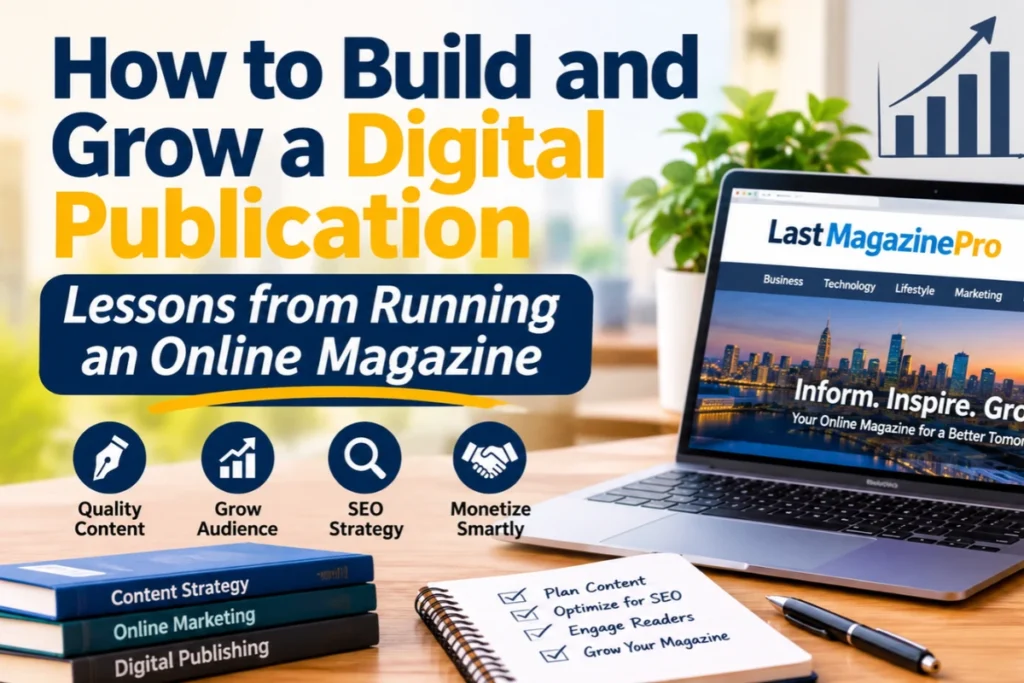
How to Build and Grow a Digital Publication | Lessons from Running an Online Magazine
Source: tripguiderz.com
Digital publishing has changed how people create, distribute, and consume information. What once required a traditional publishing company, a large editorial team, and significant financial resources can now begin with a website, a clear content strategy, and a commitment to serving readers.
However, launching an online magazine is only the first step. Building a publication that readers trust, search engines recognize, and contributors want to work with requires consistent planning and long-term effort.
Independent publishers face several challenges, including choosing the right topics, maintaining editorial standards, attracting an audience, and developing sustainable revenue streams. Understanding these areas can help publishers build a stronger foundation and avoid common mistakes.
This article explores practical lessons for starting and growing a digital publication, particularly for independent publishers working with limited resources.
1. Start With a Clear Publishing Purpose
Every successful publication needs a reason to exist. Before purchasing a domain or publishing the first article, publishers should understand whom they want to reach and what value their content will provide.
A publication covering every possible subject may struggle to establish a recognizable identity. Readers are more likely to return when they understand what a website offers and consistently find useful information.
Start by identifying three things:
- Target audience: Who are the readers you want to reach?
- Editorial focus: Which subjects can your publication cover effectively?
- Reader value: What information, insights, or solutions will your content provide?
For example, an independent online magazine might cover technology, business, lifestyle, and digital trends. These categories can work together when the publication maintains a clear editorial direction.
The objective is not simply to publish frequently. It is to create a recognizable destination for useful information.
2. Choose Content Categories With Long-Term Potential
Content categories influence how a publication develops its identity. They also help editors organize topics, plan future articles, and establish relationships between related pieces of content.
Rather than selecting categories based only on current trends, consider subjects that offer opportunities for ongoing coverage.
Some useful publishing areas include:
- Technology and digital innovation
- Business and entrepreneurship
- Marketing and online growth
- Lifestyle and personal development
- Education and emerging digital skills
- Travel and cultural experiences
A good editorial category should have enough depth to support multiple meaningful articles. Publishers should also evaluate whether they have the knowledge, research resources, and editorial capacity to cover that subject responsibly.
A focused collection of useful articles is generally more valuable than a large collection of unrelated posts.
3. Develop a Consistent Content Publishing Strategy
Consistency is one of the most important elements of building an online publication. Readers need a reason to return, and contributors need to understand the publication’s expectations.
However, consistency does not necessarily mean publishing several articles every day.
A manageable editorial calendar can help independent publishers maintain quality without overwhelming their resources.
For example, a weekly publishing schedule might include:
- One in-depth educational article
- One industry news or trend analysis
- One practical guide or tutorial
- One expert opinion or experience-based contribution
The schedule should reflect available resources rather than an unrealistic publishing target.
Editors can also maintain a topic backlog containing future article ideas, seasonal opportunities, and subjects that deserve additional research.
This approach makes content planning more organized and reduces the pressure to publish material simply to meet a deadline.
4. Make Editorial Quality a Priority
Publishing regularly is useful, but quality determines whether readers find the content valuable.
An article should answer a genuine question, explain a subject clearly, and provide information that readers can use.
Before publishing, editors should review several important elements:
- Accuracy: Verify important facts, statistics, names, dates, and references.
- Originality: Avoid copying existing articles or simply rewriting information already available elsewhere.
- Clarity: Use straightforward language, descriptive headings, and logical paragraph structures.
- Sources: Reference credible primary sources when discussing research, industry developments, or factual claims.
- Readability: Remove unnecessary repetition and make complicated subjects easier to understand.
Artificial intelligence can support research organization, outlining, and editing, but it should not replace editorial judgment or factual verification.
A publication builds credibility through the quality of its work over time, not through the number of articles it produces.
5. Use SEO to Help Readers Discover Your Content
Search engine optimization can help independent publishers connect their articles with people actively looking for information.
However, SEO should begin with understanding the reader’s search intent rather than inserting keywords into every paragraph.
A practical SEO workflow includes:
- Research the questions readers ask about a particular topic.
- Select a primary subject and relevant search phrase.
- Create a descriptive title that accurately represents the article.
- Organize the content with meaningful headings.
- Add relevant internal links to related articles.
- Reference trustworthy external sources where appropriate.
- Write a useful meta description.
- Review the page’s mobile experience and loading performance.
Internal linking is particularly useful for growing publications. When related articles reference one another naturally, readers can explore additional information without repeatedly returning to search results.
For example, an article about digital marketing can link to relevant guides about content strategy, audience development, and online business growth.
Publishers should also monitor search performance through tools such as Google Search Console. Search impressions, clicks, indexing information, and search queries can help identify opportunities for improvement.
The goal should be to create useful content that deserves to be discovered, rather than publishing pages solely to target keywords.
Using Google Search Console performance reports can help publishers evaluate impressions, clicks, and search visibility.
6. Build an Audience Beyond Search Engines
Search traffic can be valuable, but relying on a single acquisition channel creates unnecessary risk.
Search visibility can change, algorithms evolve, and competitive topics become more difficult to rank for. Independent publishers should therefore develop additional ways to reach readers.
Some practical approaches include:
- Email newsletters: Allow interested readers to receive updates about new articles and important publication developments.
- Social media distribution: Share useful content in communities and on platforms where the intended audience is active.
- Contributor relationships: Work with knowledgeable writers who can introduce new perspectives and audiences.
- Industry networking: Build genuine relationships with professionals, editors, and other publishers.
- Content updates: Improve older articles when information changes or new developments make an existing guide more useful.
Audience development should be treated as an ongoing activity rather than something that happens automatically after publication.
7. Create a Sustainable Business Model
An independent publication needs a realistic financial plan if it is expected to operate over the long term.
There is no single business model that works for every online magazine. Revenue opportunities depend on the publication’s audience, subject matter, reputation, and editorial resources.
Common options include:
- Display advertising
- Affiliate partnerships
- Sponsored content
- Paid subscriptions
- Digital products and resources
- Professional services and consulting
Each option requires careful consideration.
For example, sponsored content may provide revenue opportunities, but publishers should establish clear editorial requirements and disclose commercial relationships appropriately.
Affiliate links should be relevant to the subject being discussed and should not undermine readers’ trust.
A sustainable publication balances financial objectives with its responsibility to provide accurate and useful information.
Short-term revenue should never become more important than long-term credibility.
8. Learn From Publishing Challenges
Running an independent online magazine involves practical challenges that are not always visible to readers.
Limited resources can make it difficult to manage research, editing, technical maintenance, and distribution simultaneously. Competition for attention also means that publishing a good article does not automatically guarantee an audience.
One important lesson is to focus on manageable improvements.
Instead of attempting to compete with large media organizations in every category, smaller publishers can concentrate on subjects they understand and cover them thoughtfully.
Another important lesson is to evaluate performance using meaningful indicators. Website traffic matters, but it should not be the only measure of progress.
Publishers can also review:
- Returning visitors
- Newsletter subscriptions
- Engagement with individual articles
- Search visibility
- Content updates and indexing
- Reader feedback
- Revenue relative to operating costs
These indicators provide a more complete picture of how a publication is developing.
9. Practical Lessons From Running LastMagazinePro
Operating an independent digital publication provides a useful perspective on the difference between publishing content and building a sustainable editorial platform.
At Last Magazine Pro, the broader publishing approach involves covering subjects such as business, technology, lifestyle, and emerging digital trends.
One practical lesson is that an online magazine needs more than a collection of articles. It needs an organized editorial direction, consistent publishing standards, and a clear understanding of its readers.
Another lesson is the importance of making each article useful independently. A reader should be able to arrive at a single page through a search engine and understand the subject without needing to visit several other pages first.
Content organization also matters. Relevant categories, descriptive headlines, meaningful internal links, and updated information make it easier for readers to navigate a publication.
Perhaps the most important lesson is that sustainable publishing is a gradual process. Building recognition, improving editorial quality, and developing an audience require continuous attention.
Independent publishers should evaluate what is working, identify weaknesses, and make improvements based on evidence rather than assumptions.
10. The Future of Independent Digital Publishing
The digital publishing industry will continue to evolve as technology changes how information is created and distributed.
Artificial intelligence, changing search experiences, newsletters, independent creator platforms, and new audience distribution channels are creating opportunities as well as challenges.
For smaller publishers, these developments make editorial identity increasingly important.
When large volumes of information can be produced quickly, readers need publications that offer accurate reporting, thoughtful analysis, useful explanations, and recognizable editorial standards.
Independent publishers can respond by investing in subject knowledge, transparent sourcing, strong editing, and meaningful relationships with their audiences.
Technology may change the publishing process, but trust remains an essential part of the relationship between a publication and its readers.
Conclusion
Building and growing a digital publication requires more than launching a website and publishing articles. It involves defining an editorial purpose, understanding readers, maintaining quality, developing a consistent content strategy, and finding sustainable ways to reach an audience.
Independent publishers do not need to imitate large media organizations. They can build meaningful publications by concentrating on their strengths, learning from practical experience, and improving their work over time.
Ultimately, a successful digital publication is not defined only by how much content it produces. Its long-term value comes from how consistently it provides information that readers can trust and use.
For publishers willing to approach the process with patience and a clear editorial vision, digital publishing offers an opportunity to build something valuable and sustainable.

My name is Arman, and I am the founder of Last Magazine Pro, a digital publication dedicated to delivering high-quality content on business, technology, artificial intelligence, startups, investing, and leadership. I am passionate about creating informative, well-researched, and reader-focused content that helps people stay informed about the latest trends and innovations. My goal is to build a trusted platform that provides valuable insights, practical knowledge, and reliable information for professionals, entrepreneurs, and curious readers around the world.